Countries Every country as a single card — flag, outline, the numbers, five lines of history and three things worth knowing. Grouped into clockwise tours rather than alphabetically, because the order is the point: each section is a ring you trace in one direction from one fixed start.
77 of 197 countries written, across 23 tours.
Nordic & Baltic
Europe · tour 1 · 8 of 8 written · clockwise around the Baltic Sea, entered from the Atlantic
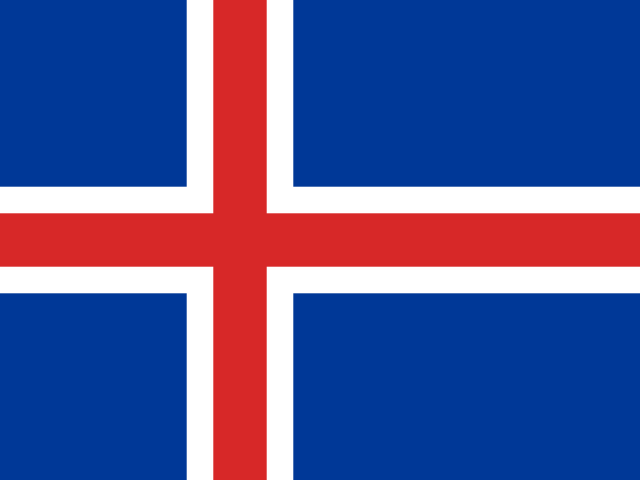
1 1. Iceland 2 2. Norway 3 3. Sweden 4 4. Finland 5 5. Estonia 6 6. Latvia 7 7. Lithuania 8 8. Denmark Numbered clockwise; the dashed line is the ring and the faint one is the wrap back to the start. actual drawn Iceland IS 1 Volcanoes, the oldest parliament, and a population smaller than most cities.
"Ice land" — reputedly named unhelpfully to discourage settlers.
Capital Reykjavik Population About 390,000 Area About 103,000 km² GDP About $33 billion Per head About $85,000 Languages Icelandic Currency Icelandic króna Government Parliamentary republic Founded 1944 Religion Lutheran Church of Iceland 58%, no religion or unaffiliated around 30% History Settled by Norse and Celtic people from around 874; the Althing convened at Þingvellir in 930. Submitted to Norway in 1262, passing to Denmark with the Kalmar Union. The Laki eruption of 1783 killed a fifth of Icelanders and caused famine as far as Europe. Full independence from Denmark in 1944, declared while Denmark was under German occupation. Banking collapse in 2008 wiped out a sector ten times the size of the economy; bankers went to prison. Who lives there About 84% born in Iceland; the largest foreign group is Polish, at roughly 6% of the population. One of the most genetically studied populations on earth — the founder group was small and the genealogies run back a thousand years. The foreign-born share roughly tripled between 2000 and 2024, from a very low base. Culture Patronymics, not surnames: Jón's daughter is Jónsdóttir, and the phone book is alphabetised by first name. Jólabókaflóð , the Christmas book flood — most books are published in the weeks before Christmas and given on the 24th.Belief in the huldufólk , the hidden people, is common enough that road schemes have been rerouted around their rocks. Worth knowing The Althing, founded in 930, is the oldest surviving parliament in the world. Patronymics not surnames: Jón's daughter is Jónsdóttir, and the phone book is alphabetised by first name. It sits on the Mid-Atlantic Ridge, so it is being torn in two at about 2 cm a year. ← Denmark 1 of 8 Norway →
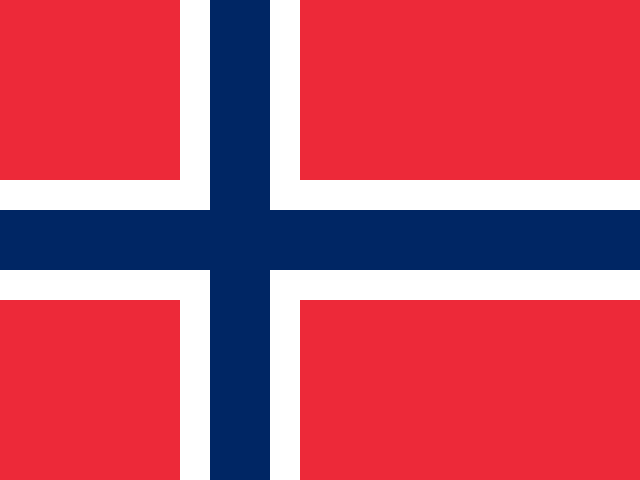
actual drawn Norway NO 2 Fjords, oil, and the largest sovereign wealth fund on earth.
Norðrvegr , "the north way" — the coastal sailing route itself.
Capital Oslo Population About 5.6 million Area About 385,000 km² including Svalbard GDP About $485 billion Per head About $87,000 Languages Norwegian (Bokmål and Nynorsk), Sámi Currency Norwegian krone Government Constitutional monarchy, parliamentary Founded 1905 Religion Church of Norway 63%, no religion around 20%, Islam 3% History Unified around 872 under Harald Fairhair; Norse expansion reached Iceland, Greenland and Newfoundland. Entered union with Denmark in 1380 and stayed there for four centuries — "the 400-year night" in national memory. Handed to Sweden in 1814 after Denmark backed Napoleon; kept its own constitution, adopted 17 May. Peaceful dissolution of the Swedish union in 1905, then an imported Danish prince as king. Oil found at Ekofisk in 1969 turned a poor fishing nation into one of the richest states in the world within a generation. Who lives there About 82% Norwegian; roughly 16% are immigrants or their children, largest groups Polish, Lithuanian and Ukrainian. The Sámi are the indigenous people of the north, with their own parliament since 1989 and perhaps 40,000 people in Norway. Two written standards of Norwegian, Bokmål and Nynorsk, both official; each municipality chooses. Culture Friluftsliv , open-air living, is close to a civic duty, and allemannsretten gives everyone the right to walk and camp on uncultivated land.Janteloven , the law of Jante: ten rules from a 1933 novel about not thinking yourself better than anyone, quoted constantly and half-seriously.17 May, Constitution Day, is marked with children's parades rather than military ones. Worth knowing The sovereign wealth fund owns roughly 1.5% of all listed shares on the planet. It has twice voted against joining the EU — 1972 and 1994. The coastline, counting fjords and islands, is over 100,000 km — more than twice the earth's circumference. ← Iceland 2 of 8 Sweden →
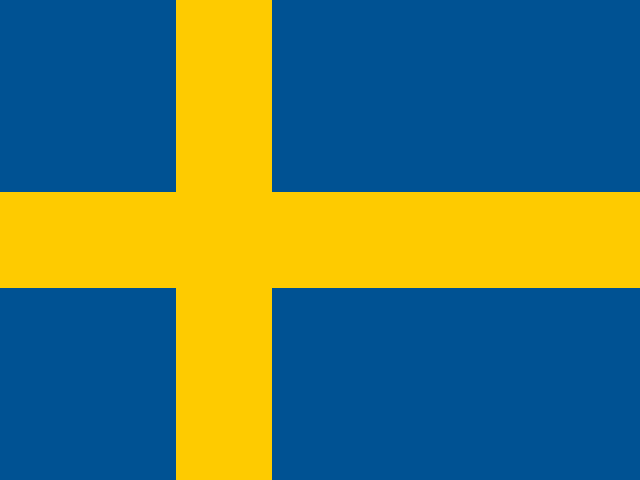
actual drawn Sweden SE 3 A great power that stopped, then invented the modern welfare state.
From Svear , the tribe; Sverige is "the realm of the Swedes".
Capital Stockholm Population About 10.6 million Area About 450,000 km² GDP About $610 billion Per head About $58,000 Languages Swedish Currency Swedish krona Government Constitutional monarchy Founded 1523 Religion Church of Sweden 52% by membership, but among the least religious populations… History Left the Kalmar Union in 1523 under Gustav Vasa, who also imposed the Reformation. The Swedish Empire (1611–1721) made the Baltic a Swedish lake under Gustavus Adolphus and Charles XII. Defeat by Russia at Poltava (1709) ended the empire; the loss of Finland in 1809 completed it. Neutral from 1814 — the longest unbroken peace of any European state. The folkhemmet social model built from the 1930s; joined the EU in 1995, NATO in 2024. Who lives there About 80% of Swedish background; roughly a fifth are foreign-born, largest groups Syrian, Iraqi and Finnish. Five official minority languages: Finnish, Meänkieli, Sámi, Romani and Yiddish. Sweden took more refugees per head than any other EU state in 2015, which reshaped both the demography and the politics. Culture Fika — a coffee break taken seriously enough to be written into the working day.Lagom : not too much, not too little. It has no clean English equivalent and is used as praise.Midsummer, not Christmas, is the emotional centre of the year: maypole, pickled herring, and an evening that never quite gets dark. Worth knowing It has not fought a war since 1814, which is longer than any other country in Europe. Allemansrätten gives everyone the legal right to walk, camp and forage on private land.Sweden and Ukraine are the two blue-and-yellow flags; Sweden puts the yellow in a cross. ← Norway 3 of 8 Finland →
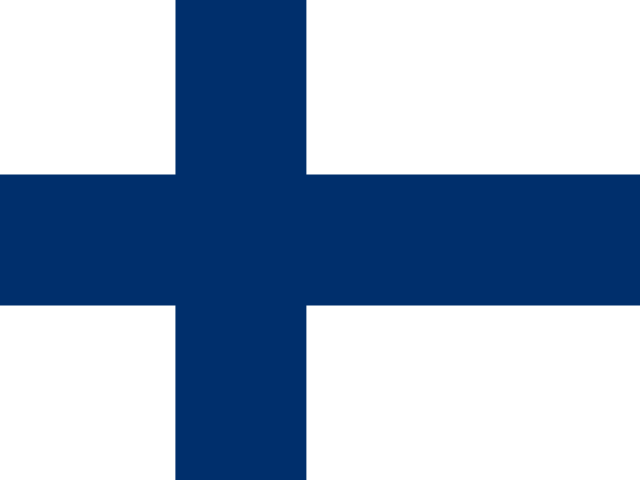
actual drawn Finland FI 4 A thousand lakes, a language related to almost nothing nearby, and Nokia.
Suomi in Finnish, origin disputed; "Finland" is the Swedish exonym.
Capital Helsinki Population About 5.6 million Area About 338,000 km² GDP About $300 billion Per head About $54,000 Languages Finnish, Swedish Currency Euro Government Parliamentary republic with a president who keeps real… Founded 1917 Religion Lutheran 63%, no religion 33% History Part of Sweden for some six centuries; Swedish is still an official language. Ceded to Russia in 1809 as an autonomous Grand Duchy, which preserved its institutions. Independence in 1917 during the Russian Revolution, followed immediately by a brutal civil war. The Winter War (1939–40) against the USSR: massive losses inflicted, territory lost, independence kept. Cold War neutrality ("Finlandisation"), EU in 1995, and NATO in 2023 after Russia invaded Ukraine. Who lives there About 86% Finnish-speaking and 5% Swedish-speaking — a constitutionally equal national language, not a minority one. The Sámi in Lapland number around 10,000, speaking three distinct Sámi languages. The smallest foreign-born share in the Nordic set at roughly 9%, though it is rising quickly. Culture The sauna: about three million of them for five and a half million people, and a place for negotiating or for silence rather than noise. Sisu — stubborn endurance against the odds, untranslatable, and used as the national self-description.Comfort with silence. Pauses that would be unbearable elsewhere pass without comment. Worth knowing Finnish is Finno-Ugric — a cousin of Estonian and distant cousin of Hungarian, unrelated to Swedish or Russian. There are more saunas than cars, roughly two million for 5.6 million people. It shares a 1,340 km border with Russia, the longest of any EU state. ← Sweden 4 of 8 Estonia →
actual drawn Estonia EE 5 Digital government, and singing its way out of an empire.
Possibly from Aestii , a people Tacitus placed on the Baltic.
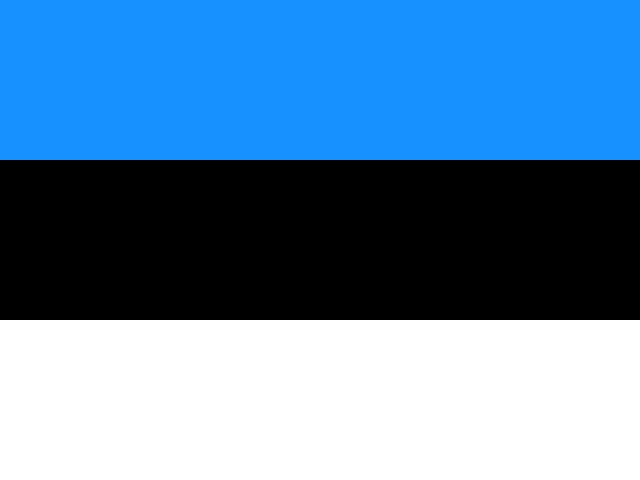
Capital Tallinn Population About 1.4 million Area About 45,000 km² GDP About $41 billion Per head About $30,000 Languages Estonian Currency Euro Government Parliamentary republic Founded 1918 Religion The least religious country in Europe History Conquered by the Livonian Order in the 13th century; ruled in turn by Denmark, Sweden and Russia. National awakening in the 19th century built around language and song festivals. Independent 1918–1940, then annexed by the USSR under the Molotov-Ribbentrop Pact. The Singing Revolution (1987–91) — mass public singing of banned songs — ended in independence in 1991. Rebuilt as a digital state: e-residency, online voting since 2005, EU and NATO in 2004. Who lives there About 69% Estonian and 24% Russian, concentrated in Tallinn and the north-east — Narva is over 90% Russian-speaking. Citizenship in 1991 was restored to pre-1940 citizens and their descendants, leaving many Soviet-era arrivals stateless; around 5% still hold grey passports. Estonian is Finno-Ugric, closer to Finnish than to any other neighbour's language. Culture The Song Festival: a choir of tens of thousands every five years, and the 1988 Singing Revolution was exactly this. The most digital state in the world — e-residency, online voting since 2005, and almost every government service done from a phone. A strong pagan undertow: midsummer bonfires, sacred groves, and a national epic assembled in the 19th century. Worth knowing Estonian is Finno-Ugric; Tallinn is 80 km from Helsinki and the languages are cousins. Around 99% of state services are online, and you can found a company in minutes as a non-resident. In 2007 it was the target of the first large-scale cyberattack on a country. ← Finland 5 of 8 Latvia →
actual drawn Latvia LV 6 Art Nouveau Riga, and a flag older than most nations.
From the Latgalians, one of the Baltic tribes.
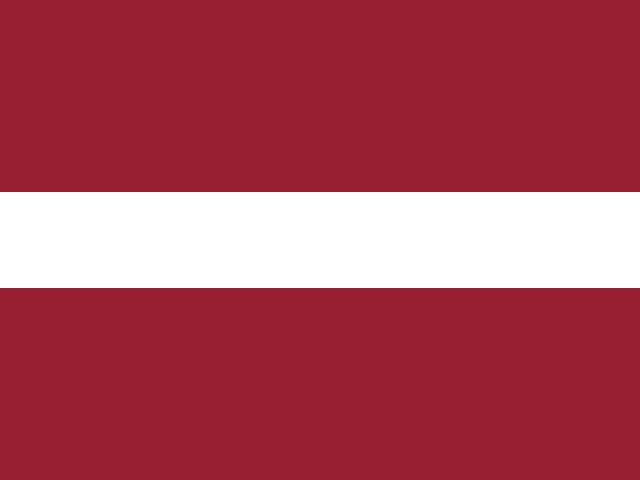
Capital Riga Population About 1.9 million Area About 65,000 km² GDP About $46 billion Per head About $24,000 Languages Latvian Currency Euro Government Parliamentary republic Founded 1918 Religion Lutheran, Catholic and Orthodox in roughly equal thirds among believers History Riga founded in 1201 and became a major Hanseatic port; a German-speaking elite ruled for centuries. Swedish then Russian rule from the 17th and 18th centuries. Independent 1918–1940; annexed by the USSR, then occupied by Germany, then the USSR again. Mass deportations to Siberia in 1941 and 1949 removed a large share of the population. Independence restored 1991; EU and NATO in 2004; the euro in 2014. Who lives there About 63% Latvian and 24% Russian — the largest Russian minority share in the EU. Riga was majority Russian-speaking for much of the Soviet period and remains close to evenly split. Around 10% of residents hold non-citizen status, a category created in 1991 and slowly shrinking. Culture The Song and Dance Festival, held since 1873 and UNESCO-listed, with choirs numbering tens of thousands. Dainas : over a million short folk verses collected in the 19th century, the largest such body in the world for the population.Riga holds the finest concentration of Art Nouveau architecture anywhere — roughly a third of the city centre. Worth knowing Riga has one of the largest concentrations of Art Nouveau architecture in the world. Roughly a quarter of the population are ethnic Russians, the legacy of Soviet-era settlement. The flag's carmine is said to come from a chief's blood-stained sheet — and the design is documented from the 13th century. ← Estonia 6 of 8 Lithuania →
actual drawn Lithuania LT 7 Having once been the largest country in Europe, and forgetting to mention it.
First recorded as Lituae in 1009; origin uncertain.
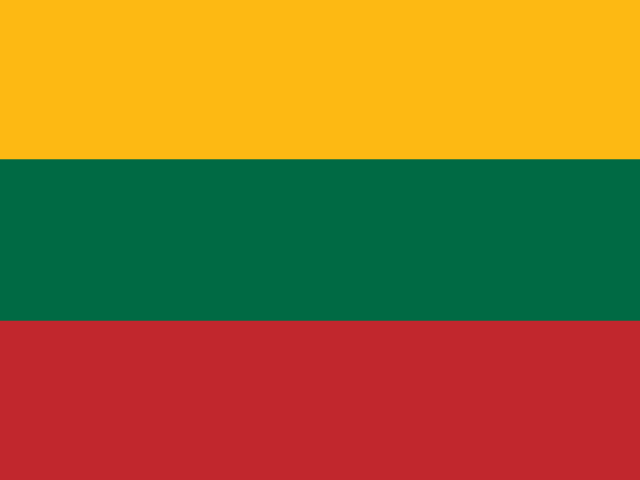
Capital Vilnius Population About 2.9 million Area About 65,000 km² GDP About $80 billion Per head About $28,000 Languages Lithuanian Currency Euro Government Semi-presidential republic Founded 1918 Religion Roman Catholic 74% History The last pagan state in Europe, converting only in 1387. The Grand Duchy stretched from the Baltic to the Black Sea in the 15th century — the largest state in Europe. The Polish-Lithuanian Commonwealth (1569–1795) was an elective monarchy with a famously paralysing veto. Partitioned away by Russia; independent 1918–1940; Soviet annexation and mass deportation. First Soviet republic to declare independence, March 1990 — a year and a half before the USSR dissolved. Who lives there About 85% Lithuanian, with Polish (6%) and Russian (5%) minorities — the most homogeneous of the Baltic three. The Polish minority is concentrated around Vilnius, which was Polish between the wars. The Jewish population of Vilnius, once a third of the city and the centre of Litvak learning, was almost entirely destroyed in the Holocaust. Culture Basketball is a national religion, and the 1992 Olympic team funded by the Grateful Dead is part of the founding myth. The Hill of Crosses near Šiauliai: hundreds of thousands of crosses, bulldozed repeatedly by Soviet authorities and rebuilt each time. The last pagan state in Europe, Christianised only in 1387, so the folk tradition sits close to the surface. Worth knowing Lithuanian is the most archaic living Indo-European language, retaining forms close to Sanskrit. The Hill of Crosses holds well over 100,000 crosses; the Soviets bulldozed it three times and people rebuilt it. The Suwałki Gap — its 65 km border with Poland — is the most nervously watched strip of land in NATO. ← Latvia 7 of 8 Denmark →
actual drawn Denmark DK 8 The oldest flag still flying, and a peninsula that corks the Baltic.
"The march of the Danes" — a border territory of the Dane people.
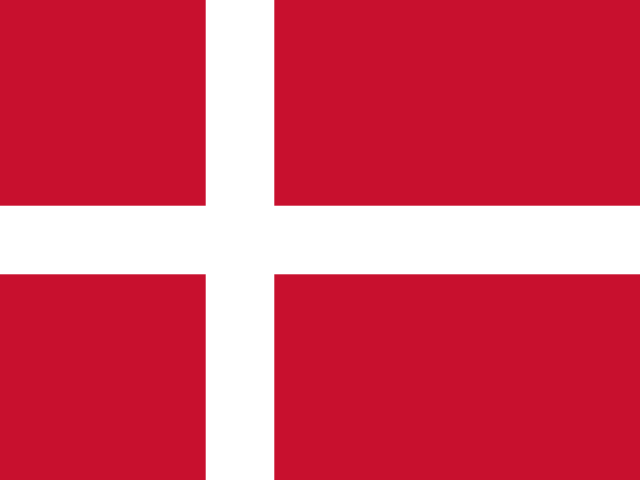
Capital Copenhagen Population About 6.0 million Area About 43,000 km² for the mainland and islands GDP About $410 billion Per head About $69,000 Languages Danish Currency Danish krone Government Constitutional monarchy Founded c Religion Church of Denmark 71% by membership History Viking Age raiders and traders from the 8th century; Cnut ruled England, Denmark and Norway by 1028. The Kalmar Union (1397) briefly joined Denmark, Norway and Sweden under one crown; Sweden broke out in 1523. Reformation in 1536 made the crown head of the church and seized monastic wealth. Lost Norway to Sweden in 1814 and Schleswig-Holstein to Prussia in 1864 — the shrinking that produced the modern small state. Occupied 1940–45; joined NATO in 1949 and the EEC in 1973, but kept the krone. Who lives there About 86% of Danish origin; roughly 14% immigrants and their descendants, largest groups Turkish, Polish, Syrian and Ukrainian. The Faroes and Greenland are part of the Kingdom under home rule; Greenlandic Inuit are a people, not a minority. A German-speaking minority in South Jutland is mirrored by a Danish-speaking one across the border — the model settlement for a contested frontier. Culture Hygge : warmth and unhurried company, which became a global export industry to general Danish bemusement.The bicycle as transport rather than sport — Copenhagen has more bikes than people. Design as a national idiom: Jacobsen, Wegner, Lego and Bang & Olufsen, all from a country of six million. Worth knowing Greenland and the Faroes are Danish territory, which makes the Kingdom of Denmark the twelfth-largest country on earth by area. The Danish word hygge has no clean translation and became a global export industry anyway. It has no mountain worth the name — the highest natural point is about 171 m. ← Lithuania 8 of 8 Iceland →
British Isles & the Low Countries
Europe · tour 2 · 6 of 6 written · clockwise around the North Sea and the Channel
1 1. Ireland 2 2. United Kingdom 3 3. Netherlands 4 4. Belgium 5 5. Luxembourg 6 6. France Numbered clockwise; the dashed line is the ring and the faint one is the wrap back to the start. actual drawn Ireland IE 1 Emigration, literature far out of proportion to its size, and a very fast economy.
From Ériu , a goddess of Irish mythology.
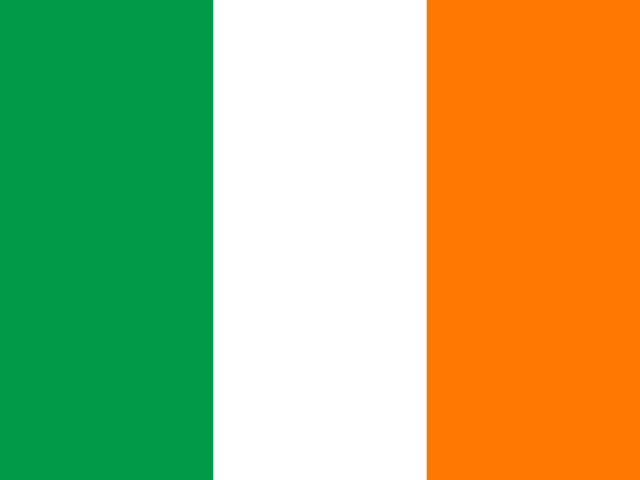
Capital Dublin Population About 5.4 million Area About 70,000 km² for the Republic GDP About $560 billion Per head About $106,000 Languages English, Irish Currency Euro Government Parliamentary republic Founded 1922 Religion Roman Catholic 69% and falling fast History Christianised from the 5th century; monasteries preserved Latin learning through Europe's disruption. Norman invasion from 1169 began eight centuries of English and then British involvement. The Great Famine (1845–52) killed about a million and drove a million more abroad. Independence after the 1916 Rising and the War of Independence; partition and civil war followed in 1922. Joined the EEC in 1973; the 1990s "Celtic Tiger", the 2008 crash, and a rapid social liberalisation since. Who lives there About 82% white Irish; the largest minorities are Polish, UK-born and, since 2022, Ukrainian. Irish Travellers are a recognised indigenous ethnic minority, about 0.7% of the population. Roughly a fifth of residents were born abroad — a complete inversion for a country that exported people for 150 years. Culture The pub as a social institution rather than a drinking one, and the seisiún where anyone with an instrument joins in. Irish is a constitutional first language and a compulsory subject, spoken daily by around 2% — kept alive by policy and affection rather than use. A literary inheritance out of all proportion to size: four Nobel laureates in literature from a country of five million. Worth knowing Its population is still below the pre-Famine peak of roughly 8 million in 1841 — uniquely in Europe. Ireland is green-white-orange; Côte d'Ivoire is the exact mirror, orange-white-green. It has produced four Nobel laureates in Literature from a population of five million. ← France 1 of 6 United Kingdom →
actual drawn United Kingdom GB 2 An empire, an industrial revolution, and an unwritten constitution.
"United Kingdom of Great Britain and Northern Ireland" — a description, not a name.
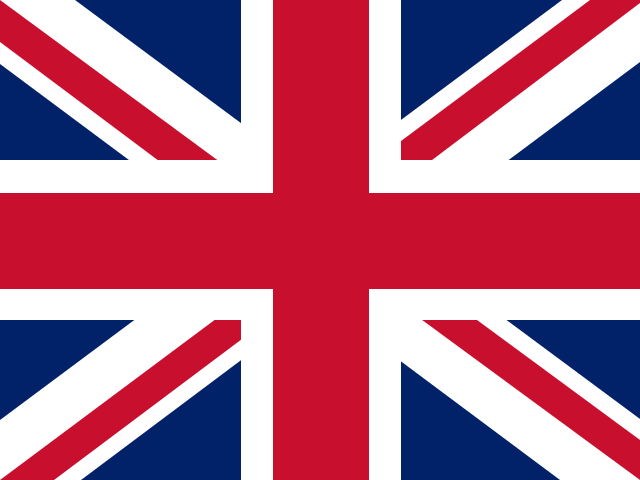
Capital London Population About 69 million Area About 244,000 km² GDP About $3.6 trillion Per head About $52,000 Languages English, Welsh, Scottish Gaelic Currency Pound sterling Government Constitutional monarchy with no codified constitution and a… Founded 1707 Religion Christian 46%, no religion 37%, Muslim 6.5% (England and Wales, 2021) History 1066 brought Norman rule; Magna Carta in 1215 began the constraint of the crown. Union with Scotland in 1707 created Great Britain; the Acts of Union with Ireland followed in 1801. The Industrial Revolution began here from the 1760s — coal, cotton, steam and the world's first industrial society. The empire peaked after 1918 at roughly a quarter of the world's land and people, then unwound within four decades. Joined the EEC in 1973, voted to leave in 2016, and left in 2020. Who lives there About 82% white, including 74% white British, with 9% Asian, 4% black and 3% mixed — the 2021 census for England and Wales. London is the outlier: under 37% white British, and over 40% of residents born outside the UK. Four constituent nations, and Welsh, Scottish Gaelic and Irish each hold official status in their own territory. Culture The queue, and the elaborate apology economy around it. The pub, the roast and tea with milk — domestic rituals that work as class markers as much as habits. A comedy tradition built on embarrassment and self-deprecation, running from Wodehouse to The Office . Worth knowing The Union Jack has a right way up — the white of St Patrick's saltire is wider above the diagonal on the hoist side. Wales is not represented on the flag: it was already annexed to England when the design was composed. Its only land border is with a country it used to govern. ← Ireland 2 of 6 Netherlands →
actual drawn Netherlands NL 3 Reclaiming its own country from the sea, and inventing the stock exchange.
"The low lands" — much of it is below sea level.
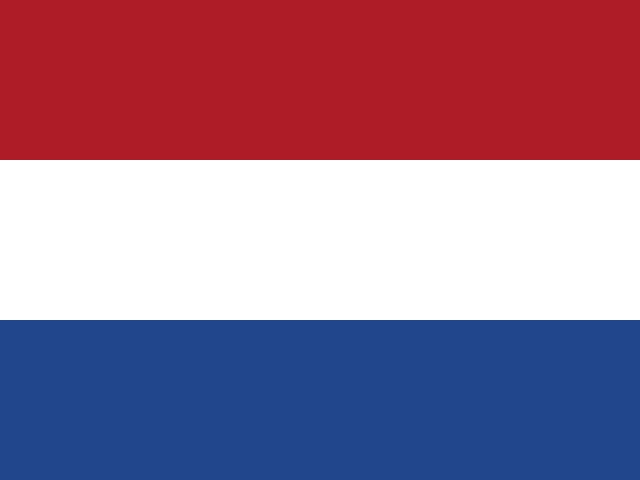
Capital Amsterdam Population About 18 million Area About 42,000 km² GDP About $1.15 trillion Per head About $64,000 Languages Dutch, Frisian Currency Euro Government Constitutional monarchy Founded 1581 Religion No religion 57% History Eighty Years' War against Spain (1568–1648) won independence and made a republic of merchants. The Dutch Golden Age: Amsterdam as the world's financial centre, the first stock exchange, Rembrandt and Vermeer. The VOC was the first company to issue tradeable shares — and ran an empire in Asia. Occupied 1940–45; the Hunger Winter of 1944–45 killed some 20,000. Founder member of the EEC; the Delta Works built after the 1953 flood are among the largest engineering projects on earth. Who lives there About 74% of Dutch background; the largest minorities are Turkish, Moroccan, Surinamese, Indonesian and Caribbean Dutch. The Surinamese and Indonesian presence is a direct inheritance of empire — we are here because you were there. Frisian is a second official language in Friesland, and the closest living language to English. Culture Gezelligheid — cosiness plus conviviality, and the standard by which an evening is judged.Directness that other Europeans read as rudeness and the Dutch read as respect for your time. The bicycle as pure infrastructure: separate networks rather than painted lanes, and more bikes than people. Worth knowing Amsterdam is the constitutional capital, but government, parliament and the monarch all sit at The Hague. Roughly a quarter of the country is below sea level and would flood without continuous pumping. Red-white-blue horizontal is Dutch; Peter the Great copied it for Russia and reordered it to white-blue-red. ← United Kingdom 3 of 6 Belgium →
actual drawn Belgium BE 4 Being the cockpit of Europe, and the seat of the EU.
From the Belgae , a tribe Caesar described as the bravest of the Gauls.
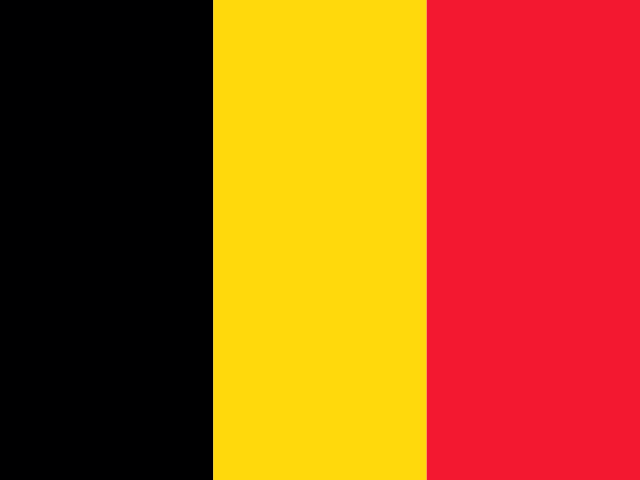
Capital Brussels Population About 11.7 million Area About 31,000 km² GDP About $660 billion Per head About $56,000 Languages Dutch, French, German Currency Euro Government Federal constitutional monarchy, divided into three regions and… Founded 1830 Religion Roman Catholic around 50% nominally, no religion 30%, Muslim 7% History Ruled in turn by Burgundy, Spain, Austria, France and the Netherlands before independence in 1830. Leopold II ran the Congo Free State as personal property; the death toll is estimated in the millions. Invaded by Germany in 1914 and again in 1940, both times as the route to France. Post-war federalisation split powers between Flemish and Walloon communities. Brussels became the de facto capital of the EU and NATO. Who lives there About 60% Flemish and Dutch-speaking, 40% Walloon and French-speaking, plus a German-speaking community of 77,000 in the east. Brussels is officially bilingual and functionally French-speaking, an enclave inside Flanders. Roughly a third of Brussels residents are foreign nationals, the highest share of any EU capital. Culture Beer as a UNESCO-listed cultural practice: over 1,500 varieties, and abbeys still brewing. Comics treated as literature — Tintin, the Smurfs, and museums that take them seriously. Surrealism as a national temperament, from Magritte to a country that once went 541 days without a government and barely noticed. Worth knowing It once went 589 days without a government and functioned perfectly well. The flag is France's form with Germany's palette , which is Belgium in one image. Language politics are so sensitive that some municipalities have facilities in both, negotiated street by street. ← Netherlands 4 of 6 Luxembourg →
actual drawn Luxembourg LU 5 Being a fortress that became a bank.
Lucilinburhuc , "little fortress" — the castle the country grew around.
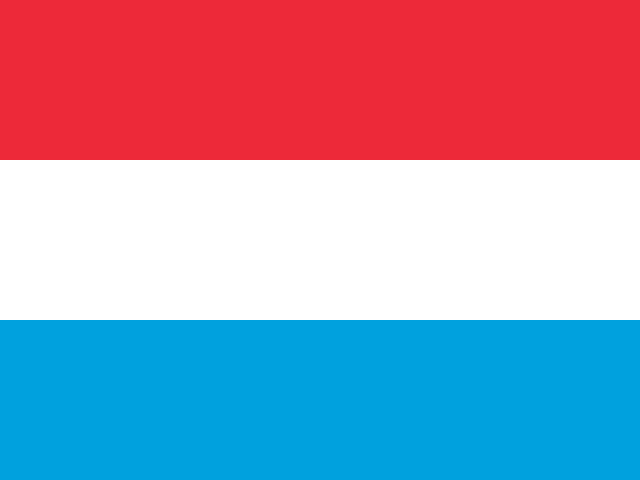
Capital Luxembourg City Population About 670,000 Area About 2,600 km² GDP About $88 billion Per head About $132,000 Languages Luxembourgish, French, German Currency Euro Government Constitutional monarchy Founded 1839 Religion Roman Catholic around 63%, no religion 26% History A county from 963, later a duchy passed between Burgundy, Spain, Austria and France. Its fortress was so strong it was called the Gibraltar of the North; the powers ordered it demolished in 1867. Independence guaranteed by neutrality, which Germany ignored in both world wars. Founder member of the EEC and of Benelux, the customs union that was its prototype. Reinvented as a financial and fund-administration centre from the 1960s. Who lives there Only about 53% are Luxembourgish nationals — the lowest native share of any EU state. The largest foreign groups are Portuguese (roughly 15%), French, Italian and Belgian. Three official languages: Luxembourgish for speech, French for law, German for the press. Most residents use all three. Culture Trilingualism as ordinary life — a conversation switching languages mid-sentence is unremarkable. Schueberfouer , a funfair running since 1340, still the fixed point of the year.The national motto, Mir wëlle bleiwe wat mir sinn — we want to remain what we are — carved on buildings in a country where half the residents are foreign. Worth knowing Roughly half the residents are foreign nationals, the highest share in the EU. Public transport across the entire country has been free since 2020. Its flag is the Dutch one sun-bleached: same order, paler blue. ← Belgium 5 of 6 France →
actual drawn France FR 6 Inventing the modern nation, the tricolour, and the metric system.
"Land of the Franks", a Germanic people who took over a Latin province.
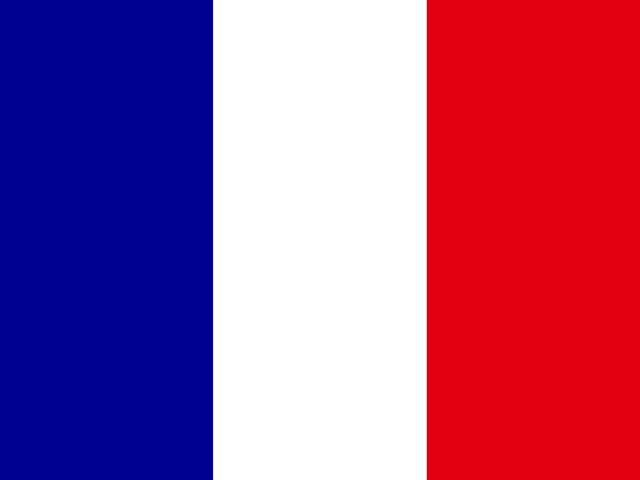
Capital Paris Population About 68 million Area About 552,000 km² for metropolitan France GDP About $3.1 trillion Per head About $46,000 Languages French Currency Euro Government Semi-presidential republic Founded 843 Religion Catholic around 47% nominally, no religion 40%, Muslim 5-8% by estimate History Roman Gaul, then Frankish rule; Charlemagne crowned Emperor in 800. Centralised royal power under Louis XIV made Versailles the model court of Europe. The Revolution of 1789 abolished feudal privilege and made the nation, not the king, sovereign. Napoleon exported the Civil Code across Europe; it outlived every border he drew. Two devastating German invasions, then co-founding the European project in the 1950s with the country that caused them. Who lives there The state collects no ethnic statistics: the constitution forbids distinguishing citizens by origin, so no official figures exist. About 10% of residents are foreign-born, with North African, sub-Saharan African and Portuguese origins the largest groups on most estimates. Regional languages — Breton, Occitan, Corsican, Alsatian, Basque — survive but hold no official status. Culture Laïcité : a strict secularism that removes religion from public institutions, and the source of most French arguments about identity.The meal as a UNESCO-listed practice — courses in order, at a table, for a length of time. A live intellectual public sphere: philosophers on television, and a philosophy exam taken by every school-leaver. Worth knowing Its tricolour is the ancestor of most flags on earth: blue and red are Paris, white was the Bourbon monarchy. It is the only large European state touching both the Atlantic and the Mediterranean. The metre was defined here in the 1790s as one ten-millionth of the distance from pole to equator. ← Luxembourg 6 of 6 Ireland →
Iberia & the Western Mediterranean
Europe · tour 3 · 8 of 8 written · clockwise around the western Mediterranean basin
1 1. Portugal 2 2. Spain 3 3. Andorra 4 4. Monaco 5 5. Italy 6 6. San Marino 7 7. Vatican City 8 8. Malta Numbered clockwise; the dashed line is the ring and the faint one is the wrap back to the start. actual drawn ∗ Portugal PT 1 Starting the Age of Discovery, and the oldest fixed borders in Europe.
From Portus Cale , the Roman harbour that became Porto.
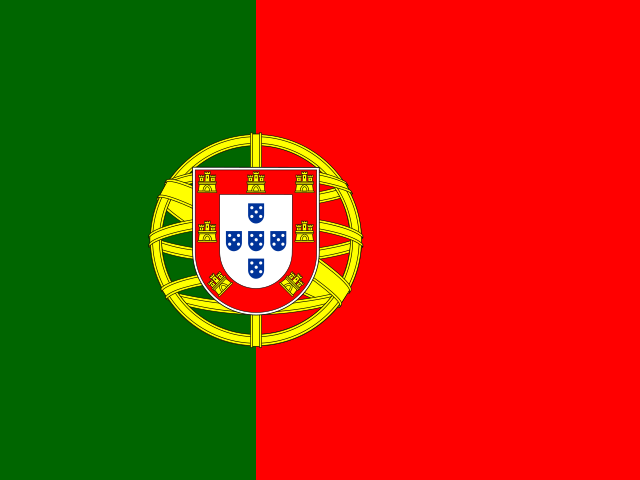
Capital Lisbon Population About 10.5 million Area About 92,000 km² GDP About $300 billion Per head About $29,000 Languages Portuguese Currency Euro Government Semi-presidential republic Founded 1143 Religion Roman Catholic 80% History Independent from 1139; its borders have barely moved since 1249, the oldest in Europe. Henry the Navigator's school drove exploration down the African coast from the 1420s. Vasco da Gama reached India in 1498; the empire ran from Brazil to Macau. The 1755 Lisbon earthquake destroyed the capital and shook European philosophy about providence. The Carnation Revolution of 1974 ended a 48-year dictatorship almost bloodlessly and freed the African colonies. Who lives there About 95% Portuguese; the largest foreign communities are Brazilian, Cape Verdean, Angolan and, recently, Nepalese and Indian. One of Europe's most homogeneous states and one of its fastest-changing — the foreign-born share doubled during the 2010s. Mirandese, spoken by a few thousand in the north-east, is a second official language. Culture Fado : urban song built on saudade , a longing for something absent that may never have existed.Azulejos — blue tiles on everything from churches to metro stations, an inheritance from Moorish Iberia.Coffee taken fast and standing, with a pastel de nata , several times a day. Worth knowing The armillary sphere on the flag is a navigation instrument — the identity is the seafaring. Portuguese is spoken by around 260 million people, mostly in Brazil. Its 1373 alliance with England is the oldest active alliance in the world. ← Malta 1 of 8 Spain →
actual drawn ∗ Spain ES 2 The first global empire, and the silver that inflated the world.
From Roman Hispania , possibly Phoenician for "land of rabbits".
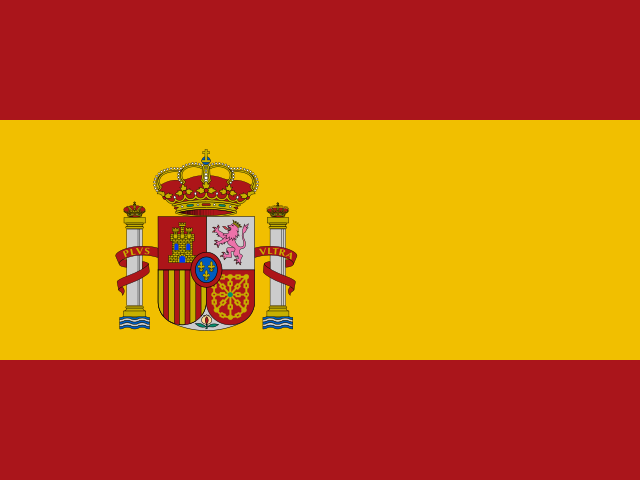
Capital Madrid Population About 48 million Area About 506,000 km² GDP About $1.7 trillion Per head About $35,000 Languages Spanish, Catalan, Galician, Basque Currency Euro Government Parliamentary constitutional monarchy with seventeen autonomous… Founded 1479 Religion Roman Catholic 55% by identification, no religion 37% History Under Muslim rule from 711; the Reconquista completed with the fall of Granada in 1492. The same year, expulsion of the Jews and Columbus's first voyage — the empire and the intolerance began together. American silver made Spain the richest power in Europe and then ruined it through inflation and endless war. Lost its last colonies in 1898; the Civil War (1936–39) brought Franco's dictatorship until 1975. Transition to democracy and monarchy under Juan Carlos; EU membership in 1986. Who lives there About 84% born in Spain; the largest foreign groups are Moroccan, Romanian, Colombian and Venezuelan. Four co-official languages beside Castilian: Catalan, Galician, Basque and Aranese. The Roma population, around 750,000, is the largest in Western Europe and has been in Spain since the 15th century. Culture The day runs late — lunch at two, dinner at ten, and the sobremesa spent at the table long after the food. Flamenco , Andalusian and Roma in origin, and a quite different art from the tourist version of it.Fiestas as civic architecture: Semana Santa, Fallas and San Fermín are local before they are national. Worth knowing Madrid sits almost exactly at the geometric centre of the country, which is why it was chosen. Spain is 14 km from Africa at Gibraltar, and still holds two cities on the African mainland. The flag's arms carry the Pillars of Hercules and the motto Plus Ultra — "further beyond". ← Portugal 2 of 8 Andorra →
actual drawn ∗ Andorra AD 3 Two heads of state, one French and one a Spanish bishop.
Uncertain; possibly Basque or Arabic in origin.
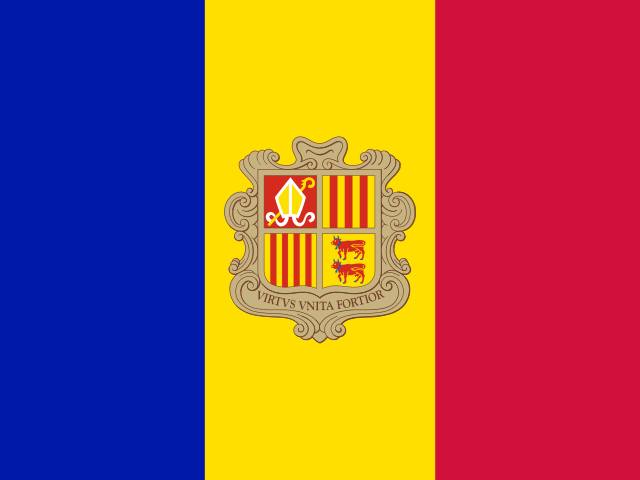
Capital Andorra la Vella Population About 80,000 Area About 468 km² GDP About $3.7 billion Per head About $45,000 Languages Catalan Currency Euro Government Parliamentary co-principality Founded 1278 Religion Roman Catholic, overwhelmingly History A charter of 1278 settled a dispute by making the French count and the Bishop of Urgell joint rulers. That arrangement has survived, in modified form, for over seven centuries. Neutral in both world wars; technically remained at war with Germany until 1958 through an oversight. A written constitution only in 1993, which finally made it a parliamentary state. Economy built on duty-free retail, then skiing and banking. Who lives there Only about 49% are Andorran nationals; Spanish, Portuguese and French residents make up most of the rest. Catalan is the sole official language — the only state in the world where that is true. Residency is tightly controlled and citizenship rarely granted, which is why the native share is so low. Culture A co-principality: the heads of state are the President of France and the Bishop of Urgell, by an arrangement from 1278. Catalan identity without Spain — the language, the sardana , and the caga tió Christmas log, in an independent state. Skiing and duty-free shopping: the whole economy, and much of the calendar. Worth knowing Still a co-principality: the French President and a Spanish bishop are joint heads of state. The highest capital in Europe at around 1,000 m. It has no airport and no railway; you arrive by road. ← Spain 3 of 8 Monaco →
actual drawn Monaco MC 4 A Grand Prix run through its own streets, and no income tax.
From a Greek epithet of Heracles, Monoikos , "single dweller".
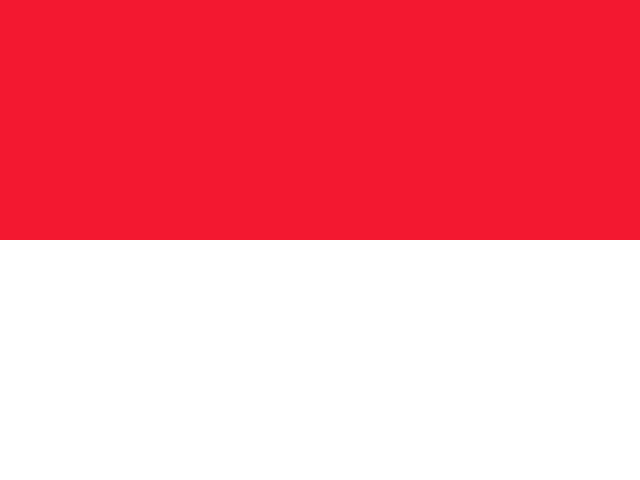
Capital Monaco Population About 39,000 Area About 2.1 km² GDP About $8.8 billion Per head About $230,000 Languages French Currency Euro Government Constitutional monarchy where the prince retains real executive… Founded 1297 Religion Roman Catholic is the state religion, around 90% nominally History Seized by the Grimaldi family in 1297, reputedly by a man disguised as a monk — still on the coat of arms. Protection alternated between Spain, France and Sardinia for centuries. Ceded Menton and Roquebrune in 1861, losing about 95% of its territory in one stroke. The Monte Carlo casino, opened 1863, funded the state and abolished income tax in 1869. A 2002 treaty ended the rule that it would revert to France without an heir. Who lives there Monégasques are a minority in their own state at about 24% of residents; French, Italian and British make up much of the rest. Only Monégasque citizens may vote and live in the subsidised housing, and citizenship is rarely granted. Monégasque, a Ligurian dialect, is taught in schools and spoken by very few. Culture The Grand Prix has run through the public streets since 1929, closing the country for a week. The Grimaldis have ruled since 1297 — the longest continuous reign in Europe. Roughly a third of residents are millionaires, and residency itself is the product being sold. Worth knowing The second-smallest country on earth, and the most densely populated. Its flag is Poland's inverted, and identical to Indonesia's except for proportion. More than a third of residents are millionaires, and roughly 70% are not citizens. ← Andorra 4 of 8 Italy →
actual drawn Italy IT 5 Rome, the Renaissance, and being a country only since 1861.
Possibly from Vitelia , "land of calves"; used for the peninsula long before the state.
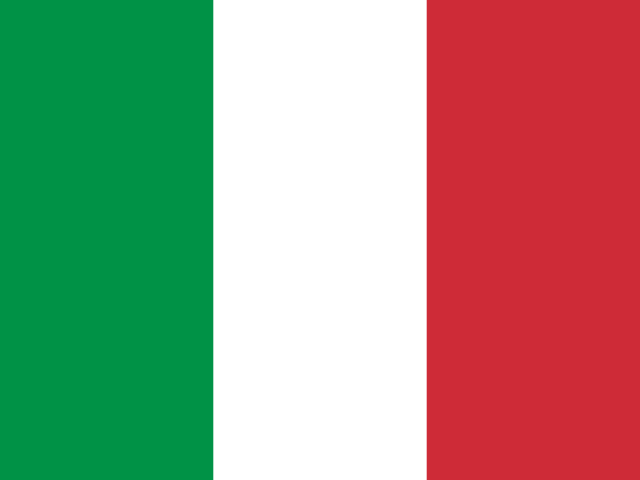
Capital Rome Population About 59 million, and falling Area About 301,000 km² GDP About $2.3 trillion Per head About $39,000 Languages Italian Currency Euro Government Parliamentary republic Founded 1861 Religion Roman Catholic around 71%, no religion 22% History Rome ruled the Mediterranean world; the western empire dissolved in the 5th century. Medieval city-states — Venice, Florence, Genoa — grew rich on trade and funded the Renaissance. Unification completed in 1871 after centuries of foreign rule; "we have made Italy, now we must make Italians". Mussolini's Fascist regime from 1922, defeat in 1943, and a republic from 1946. Founder member of the EEC; persistent north-south economic divide. Who lives there About 91% Italian citizens; the largest foreign groups are Romanian, Albanian, Moroccan and Chinese. Twelve recognised minority languages, including German in South Tyrol, French in Aosta, Slovene in Trieste and Albanian in the south. The regional dialects are separate Romance languages rather than accents, and were what most Italians actually spoke until television. Culture Campanilismo — loyalty to your own bell tower. Local identity outranks national identity almost everywhere.The passeggiata : the evening walk through the centre, to see and be seen, at a fixed hour. Food geography enforced with ferocity — the ingredients, the shape of the pasta and the hour of the coffee are all regional law. Worth knowing The only country containing two other sovereign states — San Marino and the Vatican. Italian was largely a literary language at unification; perhaps 2.5% of the population spoke it daily. Its flag is Ireland's with red instead of orange, and a darker green. ← Monaco 5 of 8 San Marino →
actual drawn ∗ San Marino SM 6 Being the world's oldest surviving republic.
Named for Saint Marinus, a stonemason who reputedly founded it in AD 301.
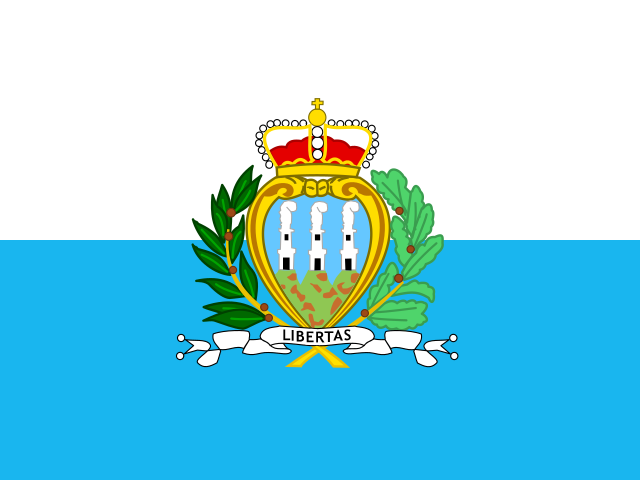
Capital San Marino Largest city Dogana Population About 34,000 Area About 61 km² GDP About $2.0 billion Per head About $59,000 Languages Italian Currency Euro Government Parliamentary republic headed by two Captains Regent serving… Founded 301 Religion Roman Catholic around 97% History Traditional founding in AD 301 by a Christian stonemason fleeing persecution. Retained independence through the Papal States, Napoleon and Italian unification. Garibaldi sheltered here in 1849; Italy granted it perpetual independence in gratitude. Sheltered around 100,000 refugees in the Second World War, four times its own population. Joined the UN in 1992; not an EU member but uses the euro. Who lives there About 84% Sammarinese and 13% Italian, on a territory entirely surrounded by Italy. Citizens abroad outnumber residents: around 13,000 Sammarinese live overseas. Italian is the only language; the Romagnol dialect survives locally. Culture Two Captains Regent elected every six months, unbroken since 1243 — the oldest continuous republican constitution in the world. It claims to be the oldest surviving sovereign state, founded in 301 by a stonemason fleeing persecution. The stamp and coin trade is a genuine cultural institution as well as a revenue stream. Worth knowing The oldest constitutional republic in the world, with statutes dating from 1600. It elects two heads of state at once, every six months, a system inherited from Rome. Landlocked entirely inside Italy, on a single mountain. ← Italy 6 of 8 Vatican City →
actual drawn ∗ Vatican City VA 7 Being the smallest country on earth and the seat of a global institution.
From the Vatican Hill, a Roman name of uncertain meaning.
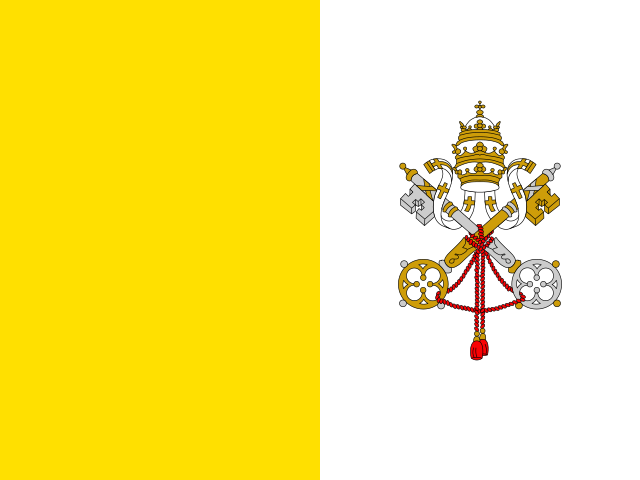
Capital Vatican City Population About 800 Area About 0.49 km² GDP No GDP is published Per head Not measured, and the question barely applies Languages Italian, Latin Currency Euro Government Absolute elective monarchy Founded 1929 Religion Catholic by definition History The Papal States ruled central Italy for over a thousand years. Italian unification seized them in 1870; the Pope declared himself a prisoner in the Vatican. The Lateran Treaty of 1929 with Mussolini created the modern state, settling the dispute. Vatican II (1962–65) reformed liturgy and the church's relationship with the modern world. Now a sovereign state of about 0.49 km² with worldwide diplomatic reach. Who lives there About 800 residents, roughly half of them Holy See diplomats posted abroad. Citizenship is granted for the duration of an office and lapses when it ends — nobody is a citizen by birth. The Swiss Guard, about 135 men, must be Swiss, Catholic, unmarried and over 174 cm. Culture Latin remains an official language, and the Vatican maintains a Latin lexicon for modern words. The conclave: cardinals sealed into the Sistine Chapel, ballots burned with chemicals to colour the smoke. One of the world's great art collections, and 1.1 million books, held by a state of 0.49 km². Worth knowing The smallest country on earth by both area and population — roughly 800 people. One of only two square national flags, with Switzerland. It has the world's only ATM with a Latin interface. ← San Marino 7 of 8 Malta →
actual drawn ∗ Malta MT 8 A siege that made the whole island a war hero.
Possibly Phoenician maleth , "haven", or Greek meli , "honey".
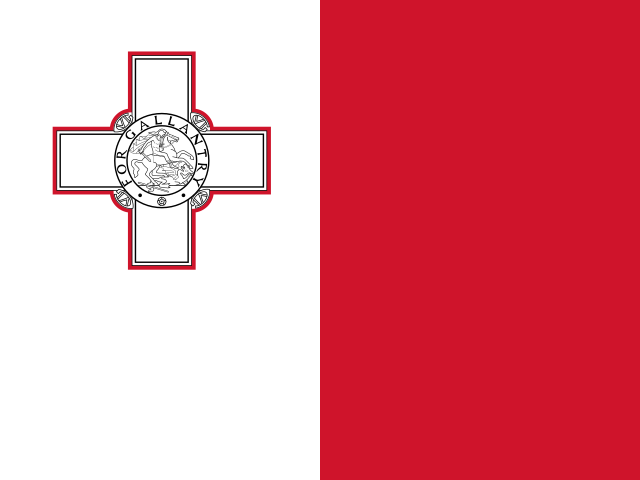
Capital Valletta Largest city Birkirkara Population About 560,000 Area About 316 km² GDP About $23 billion Per head About $41,000 Languages Maltese, English Currency Euro Government Parliamentary republic Founded 1964 Religion Roman Catholic 82% and the state religion by constitution History Neolithic temples here predate the pyramids and Stonehenge. Given to the Knights of St John in 1530; they survived the Great Siege of 1565. Napoleon took it in 1798, the British in 1800; it became a key naval base. Bombed relentlessly in 1940–42; the entire island was awarded the George Cross in 1942. Independence in 1964, a republic in 1974, and EU membership in 2004. Who lives there About 79% Maltese; the foreign-born share has risen sharply to roughly a fifth, largely Italian, British, Indian and Filipino. Maltese is a Semitic language written in the Latin alphabet — the only one — descended from Siculo-Arabic with heavy Italian borrowing. English is co-official, a British inheritance, and near-universally spoken. Culture The festa : every village marks its patron saint with a week of fireworks, band clubs and rivalry with the next village. Catholicism is the state religion by constitution; divorce was legalised only in 2011 and abortion remains banned. Band clubs — usually two per village, historically rivals — are the main social institution outside the church. Worth knowing The only national flag carrying a foreign decoration, because the island itself was decorated. Maltese is the only Semitic language written in the Latin alphabet and the only one official in the EU. The densest population in the EU, on 316 km². ← Vatican City 8 of 8 Portugal →
Alpine & Central
Europe · tour 4 · 9 of 9 written · clockwise around the Alps and the Bohemian massif
1 1. Germany 2 2. Czechia 3 3. Poland 4 4. Slovakia 5 5. Hungary 6 6. Slovenia 7 7. Austria 8 8. Liechtenstein 9 9. Switzerland Numbered clockwise; the dashed line is the ring and the faint one is the wrap back to the start. actual drawn Germany DE 1 Being the country in the middle, with no natural frontier and nine neighbours.
From Latin Germania ; Germans call it Deutschland , "land of the people".
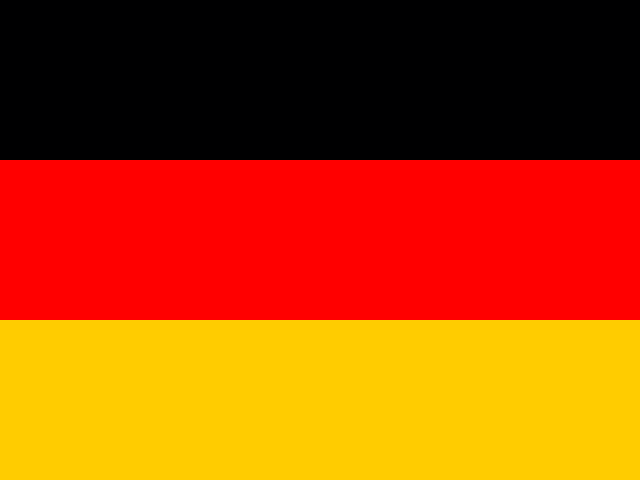
Capital Berlin Population About 84 million Area About 358,000 km² GDP About $4.7 trillion Per head About $55,000 Languages German Currency Euro Government Federal parliamentary republic Founded 1871 Religion Catholic 25%, Protestant 23%, no religion 44%, Muslim 4% History The Holy Roman Empire was a patchwork of hundreds of states, not a country — famously neither holy, Roman, nor an empire. The Thirty Years' War (1618–48) killed perhaps a third of the population of the German lands. Bismarck unified it in 1871 through three deliberate wars, then spent twenty years containing the result. Defeat in 1918, the Weimar Republic, and the Nazi regime of 1933–45 with the Holocaust at its centre. Divided 1949–1990; reunified after the Wall fell, and now the EU's largest economy. Who lives there About 76% of German background; roughly 24% have a migration background, largest groups Turkish, Polish, Syrian and Ukrainian. Four recognised national minorities: Danes, Frisians, Sorbs, and German Sinti and Roma. The east-west split still shows — the former GDR has a far smaller foreign-born share, and a different politics because of it. Culture Vereine : registered clubs for everything from football to rabbit breeding, around 600,000 of them, and the basic unit of German social life.Ordnung , and rules taken seriously — including waiting at an empty crossing for the green man.Vergangenheitsbewältigung : the deliberate institutional work of confronting the Nazi past, taught in schools and built into the cities.Worth knowing Nine land neighbours, more than any other European country — and that fact drives most of European history. Berlin's civic symbol really is a bear, which is where the peg comes from. Black-red-gold are Belgium's colours laid flat; the two flags are the same palette on different axes. ← Switzerland 1 of 9 Czechia →
actual drawn Czechia CZ 2 A revolution with no violence and a country that split with none either.
From the Čech tribe; "Bohemia" comes from the Celtic Boii.
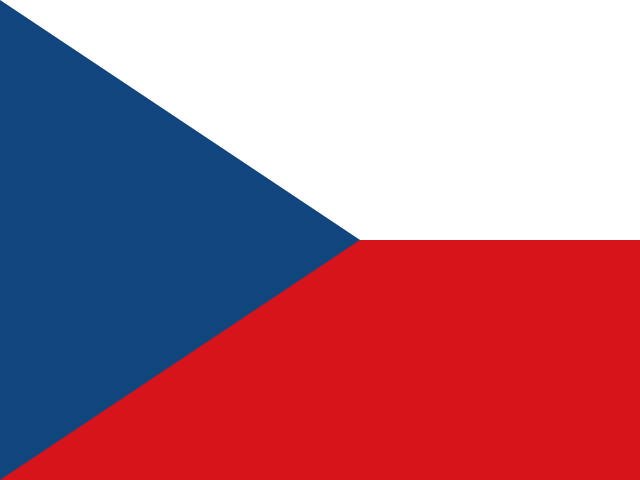
Capital Prague Population About 10.9 million Area About 79,000 km² GDP About $350 billion Per head About $32,000 Languages Czech Currency Czech koruna Government Parliamentary republic Founded 1993 Religion No religion around 70% History The Kingdom of Bohemia was a major power within the Holy Roman Empire; Prague was an imperial capital. Jan Hus was burned in 1415, a century before Luther, triggering the Hussite Wars. Habsburg rule from 1526 after the Defenestration of Prague and the Thirty Years' War. Czechoslovakia formed in 1918; Munich 1938, occupation, then the 1968 Prague Spring crushed by Soviet tanks. The Velvet Revolution of 1989 and the Velvet Divorce from Slovakia in 1993, both peaceful. Who lives there About 90% Czech; the largest minorities are Slovak, Ukrainian and Vietnamese. The Vietnamese community, around 100,000, dates from socialist-era labour agreements and is now a recognised minority. The German-speaking population of the Sudetenland, three million before 1945, was expelled almost entirely. Culture The most irreligious country in Europe — around 70% report no religion, a legacy of Habsburg Catholicism and of communism together. The highest beer consumption per head in the world, and Pilsner was invented in Plzeň in 1842. The hospoda , and an absurdist humour running from Hašek's Švejk through Kafka to Havel. Worth knowing A bowl ringed by mountains — the most naturally defensible territory in Central Europe. It kept the Czechoslovak flag after the split, so Slovakia had to design a new one. It has the highest beer consumption per head in the world, by a wide margin. ← Germany 2 of 9 Poland →
actual drawn Poland PL 3 Disappearing from the map for 123 years and coming back.
From the Polanie , "people of the fields".
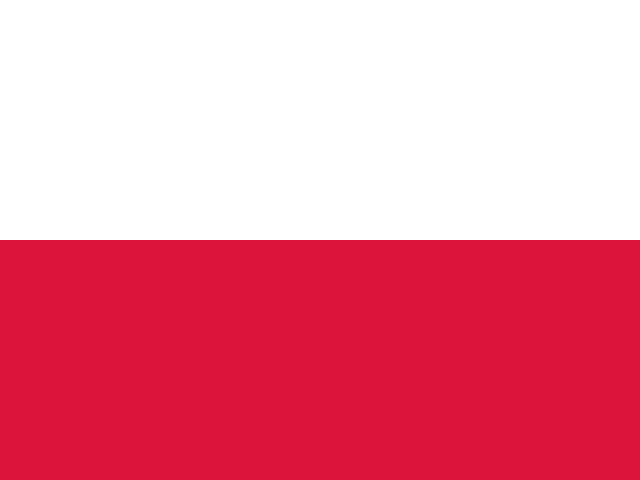
Capital Warsaw Population About 37 million Area About 313,000 km² GDP About $860 billion Per head About $23,000 Languages Polish Currency Polish złoty Government Parliamentary republic with a directly elected president… Founded 966 Religion Roman Catholic 71% by the 2021 census, down from 88% a decade earlier History Christianised in 966; the Polish-Lithuanian Commonwealth was one of Europe's largest states. Partitioned out of existence by Russia, Prussia and Austria between 1772 and 1795. Restored in 1918, invaded from both sides in 1939, and lost around a sixth of its population. Borders shifted bodily westward in 1945; the entire country moved. Solidarity, the first free trade union in the Soviet bloc, forced the 1989 transition that began the bloc's collapse. Who lives there About 97% Polish — one of the most homogeneous states in Europe, an outcome of the war and the post-war border shift. Before 1939 a third of the population was not ethnically Polish, including three million Jews. The largest group of foreign residents today is Ukrainian: over a million since 2022. Culture Catholicism as national identity — the Church carried Polish nationhood through partition and communism, and John Paul II is a founding figure. Wigilia , Christmas Eve supper: twelve meatless dishes, an empty place set, and the meal begun when the first star appears.A powerful memory culture around the Warsaw Uprising and Katyń, observed nationally each year. Worth knowing Warsaw was deliberately razed in 1944 and rebuilt from paintings by Canaletto's nephew. Flat, open, and directly between Germany and Russia — no defensible border anywhere. White above red is Poland; red above white is Monaco and Indonesia. ← Czechia 3 of 9 Slovakia →
actual drawn ∗ Slovakia SK 4 A thousand years under Hungary, and then a very quiet divorce.
From Slovák , cognate with "Slav".
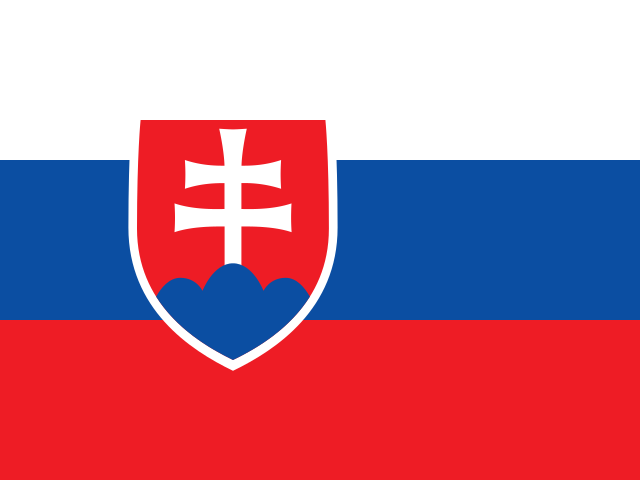
Capital Bratislava Population About 5.4 million Area About 49,000 km² GDP About $140 billion Per head About $26,000 Languages Slovak Currency Euro Government Parliamentary republic Founded 1993 Religion Roman Catholic 56%, no religion 24%, Lutheran 5% History Part of Great Moravia in the 9th century, where Cyril and Methodius created the Slavic script. Ruled from Budapest for roughly a thousand years — which is why it differs from Czechia at all. Joined Czechoslovakia in 1918; a clerical-fascist puppet state under Germany 1939–45. Peaceful separation on 1 January 1993. Joined the EU in 2004 and the euro in 2009, and became a major car manufacturer per head. Who lives there About 84% Slovak, with a Hungarian minority of roughly 8% along the southern border. The Roma population is officially about 2% and probably closer to 8% — an undercount driven by declared identity. Slovak and Czech remain mutually intelligible, and Czech television is watched without translation. Culture The fujara , a three-metre shepherd's flute, UNESCO-listed and unlike any other instrument. More castles per head than any country in the world, and a folk architecture kept in villages like Vlkolínec. The Easter Monday tradition of dousing women with water and switching them with willow — folk practice, still widely observed. Worth knowing Bratislava is the only capital bordering two other countries, Austria and Hungary. It produces more cars per head than anywhere else on earth. Its shield is a double cross on three hills; Slovenia's is a mountain and stars — that is the way to tell them apart. ← Poland 4 of 9 Hungary →
actual drawn Hungary HU 5 A language unrelated to its neighbours, and a treaty it never got over.
Magyarország , "land of the Magyars"; "Hungary" derives from the Onogur confederation.
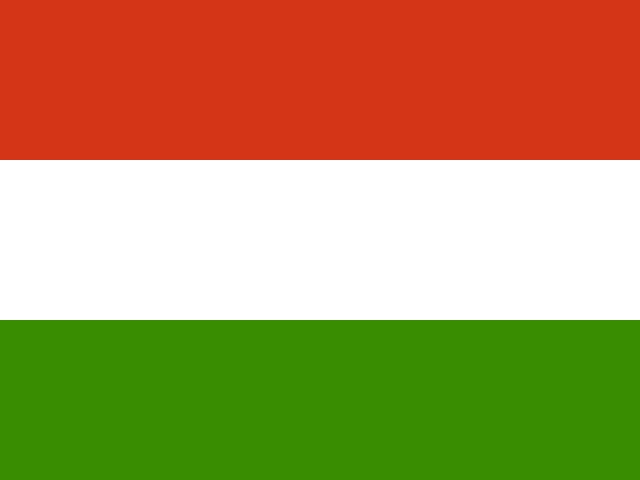
Capital Budapest Population About 9.6 million Area About 93,000 km² GDP About $220 billion Per head About $23,000 Languages Hungarian Currency Hungarian forint Government Parliamentary republic Founded 1000 Religion Catholic 30%, Calvinist 9%, no religion or undeclared over half History Magyar tribes settled the Carpathian Basin around 895; Stephen I Christianised the kingdom in 1000. Crushed by the Ottomans at Mohács in 1526 and partitioned for 150 years. Habsburg rule, then equal partnership in Austria-Hungary from 1867. The Treaty of Trianon in 1920 removed two thirds of its territory and a third of ethnic Hungarians. The 1956 uprising was crushed by Soviet forces; EU membership in 2004. Who lives there About 84% Hungarian; the Roma minority is officially 3% and probably closer to 7%. Hungarian is Uralic — unrelated to every neighbouring language, and one of the hardest facts about the country. Two million ethnic Hungarians live in neighbouring states, a direct consequence of Trianon in 1920. Culture Trianon as a permanent national wound: the 1920 treaty removed two thirds of the territory, and it is still in the political vocabulary.Thermal baths — over 1,300 springs, and Budapest's Széchenyi and Gellért are civic institutions. The táncház movement, which kept village music and dance alive from the 1970s onward and became a model elsewhere. Worth knowing Hungarian is Finno-Ugric — a distant cousin of Finnish and Estonian, unrelated to any neighbour. Trianon is still a live political wound over a century later. Budapest was two cities, Buda and Pest, joined in 1873. ← Slovakia 5 of 9 Slovenia →
actual drawn ∗ Slovenia SI 6 Leaving Yugoslavia in ten days.
From Slovenec , "Slav".
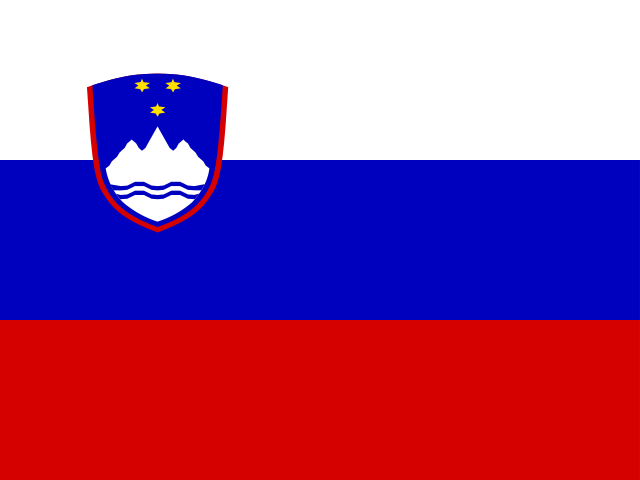
Capital Ljubljana Population About 2.1 million Area About 20,000 km² GDP About $74 billion Per head About $35,000 Languages Slovene Currency Euro Government Parliamentary republic Founded 1991 Religion Roman Catholic 73% nominally, though practice is low History Under Habsburg rule for six centuries, which oriented it toward Central Europe rather than the Balkans. Joined the Kingdom of Yugoslavia in 1918 and socialist Yugoslavia in 1945. The wealthiest Yugoslav republic, subsidising the rest. Declared independence in 1991; the Ten-Day War was the shortest of the Yugoslav conflicts. First former Yugoslav state to join the EU and the euro. Who lives there About 83% Slovene; the largest minorities are Serb, Croat and Bosniak, from the Yugoslav period. Italian and Hungarian minorities hold guaranteed parliamentary seats regardless of their size. Slovene keeps the dual number — a grammatical form for exactly two, rare among living languages. Culture Beekeeping as national practice: the Carniolan bee, painted hive panels, and World Bee Day was a Slovenian proposal. More than half the country is forest, and climbing Triglav is treated as something every Slovene should do once. The kozolec , a wooden hayrack found nowhere else, and a national symbol. Worth knowing More than half the country is forest, one of the highest shares in Europe. Its 47 km of coastline is the shortest of any country with a coast in Europe. Triglav, the mountain on the flag, is on the coat of arms because climbing it is treated as a national duty. ← Hungary 6 of 9 Austria →
actual drawn Austria AT 7 An empire that dissolved, and the music that outlasted it.
Österreich , "eastern realm" — the eastern march of the Frankish empire.
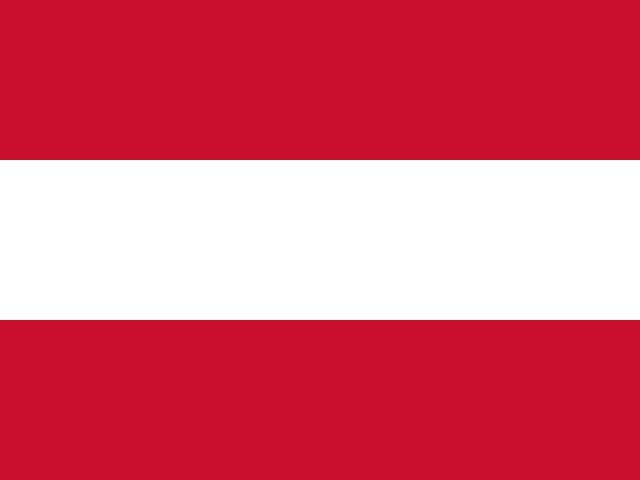
Capital Vienna Population About 9.2 million Area About 84,000 km² GDP About $520 billion Per head About $57,000 Languages German Currency Euro Government Federal parliamentary republic Founded 1918 Religion Roman Catholic 55%, no religion 22%, Muslim 8% History The Habsburgs ruled from 1282 and acquired more by marriage than by war. Stopped the Ottomans at Vienna in 1529 and 1683, the high-water marks of Ottoman Europe. Austria-Hungary from 1867 was a multi-ethnic empire of eleven nationalities held together by a dynasty. The 1914 assassination of its heir began the First World War; the empire dissolved in 1918. Annexed by Germany in 1938; neutral since 1955, joined the EU in 1995. Who lives there About 80% Austrian; roughly 27% have a migration background, largest groups German, Turkish, Serbian and Bosnian. Six recognised minorities, including Carinthian Slovenes and Burgenland Croats. Vienna is over a third foreign-born — a return to its pre-1914 character. Culture Kaffeehaus culture, UNESCO-listed, where one coffee buys a table and a newspaper for the afternoon.Music as civic infrastructure: the Philharmonic, the New Year's Concert, and a state opera with standing room anyone can afford. Heurigen , the wine taverns of the Vienna hills, open only when the new wine is ready and marked by a pine branch.Worth knowing Vienna was the musical capital of Europe: Haydn, Mozart, Beethoven, Schubert, Brahms and Mahler all worked there. Eight land neighbours, because it used to contain most of them. Its flag is bright red in equal thirds; Latvia's is dark carmine with a much narrower white band. ← Slovenia 7 of 9 Liechtenstein →
actual drawn ∗ Liechtenstein LI 8 Being doubly landlocked, and the crown added to settle a flag clash.
Named after the princely family, who bought the land to qualify for a seat in the imperial diet.
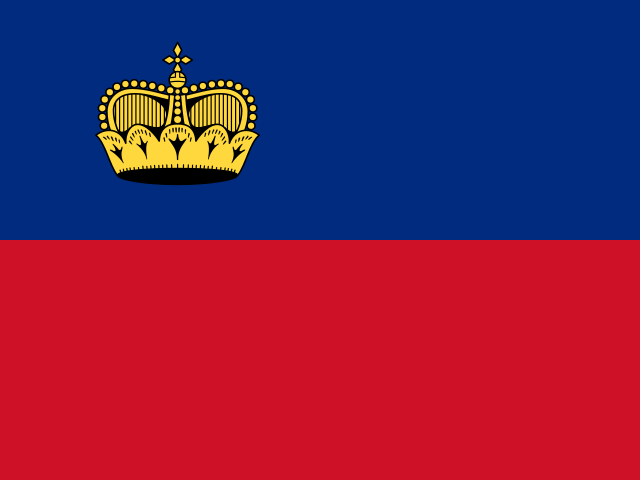
Capital Vaduz Largest city Schaan Population About 40,000 Area About 160 km² GDP About $7.4 billion Per head About $190,000 Languages German Currency Swiss franc Government Semi-constitutional monarchy Founded 1719 Religion Roman Catholic 73% and the state religion History Created in 1719 when the Liechtenstein family combined two lordships; they did not visit for over a century. Sovereign after the Holy Roman Empire dissolved in 1806. Disbanded its army in 1868 as too expensive and never rebuilt one. Customs and currency union with Switzerland since 1924. Moved from farming to finance and precision manufacturing in the 20th century. Who lives there About 66% Liechtensteiners; Swiss, Austrian and German nationals make up most of the rest. An Alemannic German dialect is spoken; standard German is the official language. Women got the vote in 1984 — the last country in Europe to grant it. Culture A reigning prince with real power: he can veto legislation and dismiss the government, confirmed by referendum in 2003. The princely art collection is among the largest in private hands anywhere. No airport, and no army since 1868 — the last deployment famously returned with one more man than it left with. Worth knowing One of only two doubly landlocked countries on earth — you cross two borders to reach the sea. The gold crown was added in 1937 after it discovered at the Berlin Olympics that its flag was identical to Haiti's. It makes more false teeth than almost anywhere, and has more registered companies than people. ← Austria 8 of 9 Switzerland →
actual drawn Switzerland CH 9 Neutrality, banking, and four national languages in a country the size of Denmark.
From the canton of Schwyz, one of the three founding cantons.
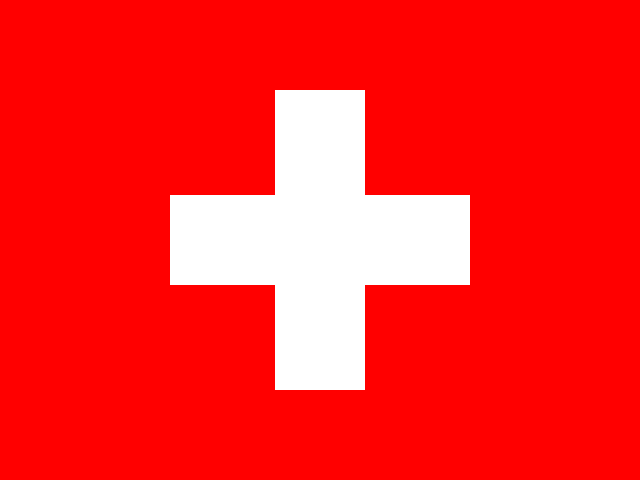
Capital Bern Largest city Zurich Population About 9.0 million Area About 41,000 km² GDP About $940 billion Per head About $106,000 Languages German, French, Italian, Romansh Currency Swiss franc Government Federal directorial republic Founded 1291 Religion Roman Catholic 32%, Protestant 21%, no religion 34% History Founded by a pact of three forest cantons in 1291, expanding by confederation rather than conquest. Swiss mercenaries were the most feared infantry in Europe for two centuries. Neutrality formalised at the Congress of Vienna in 1815 and never since broken. The 1848 constitution created the modern federal state with direct democracy at its centre. Stayed out of the UN until 2002 and is still not in the EU. Who lives there About 62% German-speaking, 23% French, 8% Italian and 0.5% Romansh — four national languages, all official. Roughly 26% of residents are foreign nationals, among the highest shares in Europe, and naturalisation is decided partly at commune level. The linguistic border, the Röstigraben , is a real cultural line and shows up in almost every referendum. Culture Direct democracy: four referendum weekends a year, and 100,000 signatures put a constitutional amendment to a national vote. Militia service with the rifle kept at home, and Fasnacht carnivals that invert the whole order for three days. Punctuality treated as a moral quality, and a rail network built to make it possible. Worth knowing Referendums are held several times a year; any 100,000 signatures can force a national vote. The Red Cross flag is the Swiss flag inverted, honouring the country where it was founded. One of only two square national flags — the other is the Vatican's. ← Liechtenstein 9 of 9 Germany →
The Balkans
Europe · tour 5 · 10 of 10 written · clockwise around the Balkan peninsula, between the Adriatic and the Black Sea
1 1. Romania 2 2. Bulgaria 3 3. Greece 4 4. Albania 5 5. Montenegro 6 6. Bosnia and Herzegovina 7 7. Croatia A A. Serbia B B. Kosovo C C. North Macedonia Numbered clockwise; the dashed line is the ring and the faint one is the wrap back to the start. Lettered stops sit in the core, off the ring. Rim
actual drawn Romania RO 1 A Latin island in a Slavic sea.
"Land of the Romans" — the language is Romance, the neighbours are not.
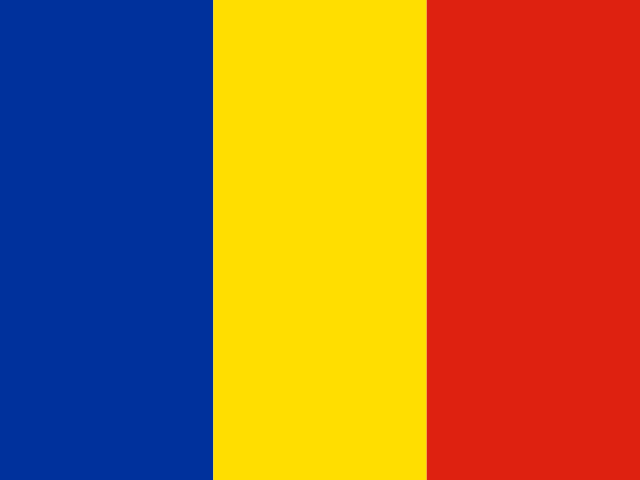
Capital Bucharest Population About 19 million Area About 238,000 km² GDP About $380 billion Per head About $20,000 Languages Romanian, Hungarian Currency Romanian leu Government Semi-presidential republic Founded 1859 Religion Romanian Orthodox 85% History Roman Dacia was occupied for only 165 years and left a Latin language that survived everything after. The principalities of Wallachia and Moldavia were Ottoman tributaries for centuries. United in 1859, independent in 1878, and gained Transylvania in 1918. Ceaușescu's regime (1965–89) ended in the only violent revolution of 1989; he was executed on Christmas Day. Joined NATO in 2004 and the EU in 2007. Who lives there About 89% Romanian, with a Hungarian minority of 6% concentrated in Transylvania. The Roma population is officially 3% and estimated at 8-10% — the largest in Europe in absolute numbers. Romanian is a Romance language, the only one in the region, and keeps Latin features the others lost. Culture The painted monasteries of Bucovina, with their frescoes on the outside walls. Mărțișor : a red-and-white thread given on 1 March to mark spring, worn until the trees blossom.Orthodox Christianity with a strong village tradition, and a Church that remains the most trusted institution in the country. Worth knowing The Palace of the Parliament is the heaviest building on earth; a fifth of old Bucharest was demolished for it. Its flag is near-identical to Chad's, differing only in the shade of blue. The Danube Delta is the best-preserved river delta in Europe. ← Croatia 1 of 7 Bulgaria →
actual drawn Bulgaria BG 2 Giving the Slavic world its alphabet.
From the Bulgars, a Turkic people who founded the first state and then adopted Slavic language.
Capital Sofia Population About 6.4 million, and shrinking faster than almost anywhere on… Area About 111,000 km² GDP About $110 billion Per head About $17,000 Languages Bulgarian Currency Bulgarian lev Government Parliamentary republic Founded 681 Religion Bulgarian Orthodox 71%, Muslim 10% History The First Bulgarian Empire (681) was the first Slavic state recognised by Byzantium. The Cyrillic alphabet was developed here in the 9th century and spread across the Slavic world. Ottoman rule for nearly five centuries from 1396; independence in 1908. Allied with Germany in both wars but refused to deport its own Jewish citizens in 1943. Communist until 1989; joined the EU in 2007. Who lives there About 85% Bulgarian, with Turkish (8%) and Roma (5%, likely more) minorities. The Turkish minority is an Ottoman inheritance; a forced assimilation campaign in the 1980s drove 300,000 to leave. Bulgarian was the first Slavic language written down, in the Cyrillic alphabet devised here in the 9th century. Culture The head shake is inverted — a nod means no and a shake means yes, and it catches out every visitor. Cyrillic as national pride: 24 May is a public holiday for the alphabet and its inventors. Nestinarstvo , fire-dancing on embers on saints' days, and a polyphonic women's singing tradition with no parallel in Europe.Worth knowing Cyrillic came from here, not Russia — Bulgaria exported the alphabet Russia now uses. It has the steepest population decline in the world. Nodding means no and shaking the head means yes. ← Romania 2 of 7 Greece →
actual drawn Greece GR 3 Inventing most of the words Europe still argues with.
Romans called them Graeci ; they call themselves Hellenes .
Capital Athens Population About 10.4 million Area About 132,000 km² across the mainland and around 6,000 islands GDP About $250 billion Per head About $24,000 Languages Greek Currency Euro Government Parliamentary republic Founded 1830 Religion Greek Orthodox around 90% History Classical city-states produced democracy, drama, philosophy and history as a discipline. Alexander spread Greek language and culture from Egypt to India. Roman province, then the heart of the Byzantine Empire for a millennium until 1453. Ottoman rule until the War of Independence from 1821; borders expanded until 1947. Civil war, junta (1967–74), EEC membership in 1981, and the debt crisis from 2009. Who lives there About 91% Greek; the largest minority is Albanian, arriving after 1991. The Muslim minority of Western Thrace, around 100,000, is protected by the 1923 Lausanne treaty and was exempted from the population exchange. That exchange moved 1.2 million Greeks out of Anatolia and 400,000 Muslims out of Greece — the largest of its kind before 1945. Culture Filoxenia , friend-to-the-stranger: hospitality as an obligation rather than a courtesy.The Orthodox calendar structures the year — name days matter more than birthdays, and Easter more than Christmas. Parea , the group of friends as a unit, and a taverna table where food is ordered for the table rather than the person.Worth knowing The nine stripes are said to be the nine syllables of "Freedom or Death". It has around 6,000 islands, of which about 227 are inhabited. Around 80% of the country is mountainous, which is why Greeks went to sea rather than farm. ← Bulgaria 3 of 7 Albania →
actual drawn ∗ Albania AL 4 Half a century of the most extreme isolation in Europe.
Shqipëria , often glossed "land of the eagles".
Capital Tirana Population About 2.8 million Area About 29,000 km² GDP About $26 billion Per head About $9,300 Languages Albanian Currency Albanian lek Government Parliamentary republic Founded 1912 Religion Muslim around 57% including a Bektashi Sufi order headquartered in Tirana,… History Skanderbeg resisted the Ottomans for 25 years in the 15th century and remains the national hero. Under Ottoman rule until independence in 1912. Enver Hoxha's regime (1944–85) broke with Yugoslavia, then the USSR, then China, and sealed the country. Religion was banned outright in 1967 — the world's first officially atheist state. Collapse in 1991, a pyramid-scheme crisis in 1997, and NATO membership in 2009. Who lives there About 82% Albanian, with small Greek and Aromanian minorities in the south. Albanian is its own branch of Indo-European with no close relatives — like Greek and Armenian. Two dialects, Gheg in the north and Tosk in the south, with the modern standard built on Tosk. Culture The Kanun , a medieval customary code covering hospitality, honour and blood feud, which revived in the north after 1991. Besa — the given word as absolute obligation, and the reason Albania sheltered Jews in 1943 and ended the war with more than it started with.The only European state to declare itself officially atheist, in 1967. Religion returned in 1990 and sits unusually lightly. Worth knowing Hoxha built hundreds of thousands of concrete bunkers against an invasion that never came. Albanian is its own branch of Indo-European, with no close living relative. Italian television, watchable across the strait, is widely credited with helping end the isolation. ← Greece 4 of 7 Montenegro →
actual drawn ∗ Montenegro ME 5 Never being fully conquered, because it was not worth the climb.
"Black mountain" — Venetian monte negro , for its dark forested karst.
Capital Podgorica Population About 620,000 Area About 14,000 km² GDP About $8 billion Per head About $13,000 Languages Montenegrin Currency Euro Government Parliamentary republic Founded 2006 Religion Orthodox 71%, Muslim 19%, Catholic 3% History A prince-bishopric from the 16th century, effectively independent of Ottoman control. Recognised as independent in 1878 and a kingdom from 1910. Merged into Yugoslavia in 1918 and stayed with Serbia through the 1990s. Voted for independence by a narrow margin in 2006, ending the last Yugoslav union. Joined NATO in 2017 despite Russian objection. Who lives there About 45% Montenegrin and 29% Serb — a split about identity rather than language, since both speak the same one. Bosniaks (9%) and Albanians (5%) make up most of the rest. In the 2011 census more people declared Serbian as their language than Montenegrin, in a state called Montenegro. Culture The Prince-Bishops: until 1852 the ruler was both, and the office passed from uncle to nephew. A self-deprecating national joke about laziness — man is born tired and lives to rest — worn with some pride. Njegoš's The Mountain Wreath , an 1847 epic that works as a national text and remains contested. Worth knowing It uses the euro without being in the EU or the eurozone — adopted unilaterally. A wall of limestone dropping straight into the Adriatic; the Ottomans mostly did not bother. The Bay of Kotor is often called Europe's southernmost fjord, though it is a drowned river canyon. ← Albania 5 of 7 Bosnia and Herzegovina →
actual drawn ∗ Bosnia and Herzegovina BA 6 Sarajevo, which opened and closed a European century.
From the river Bosna; Herzegovina from herceg , "duke".
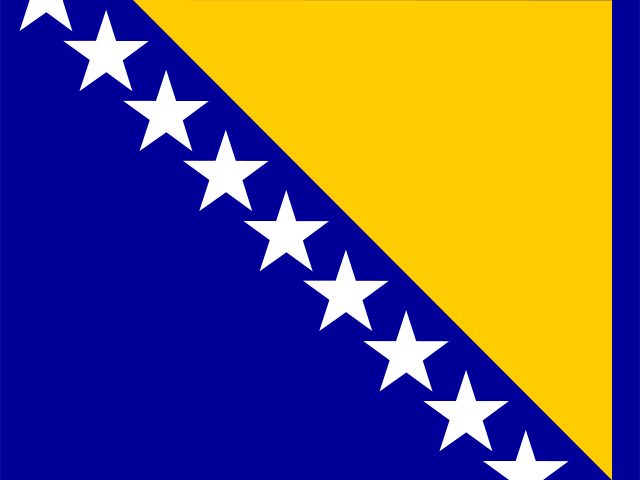
Capital Sarajevo Population About 3.2 million Area About 51,000 km² GDP About $28 billion Per head About $8,500 Languages Bosnian, Croatian, Serbian Currency Convertible mark Government Federal parliamentary republic with a three-member rotating… Founded 1992 Religion Muslim 51%, Orthodox 31%, Catholic 15% History An independent medieval kingdom, then Ottoman from 1463 — which is why it has a large Muslim population. Austria-Hungary annexed it in 1908, raising the tension that broke in 1914. The 1914 assassination of Franz Ferdinand in Sarajevo triggered the First World War. The 1992–95 war brought the siege of Sarajevo and the Srebrenica genocide. The Dayton Agreement ended the war and created a complex tripartite state that still governs. Who lives there About 50% Bosniak, 31% Serb and 15% Croat — three constituent peoples rather than a majority and its minorities. One language with three names: Bosnian, Serbian and Croatian differ about as much as British and American English. The 1995 Dayton settlement built the ethnic split into the constitution, with a three-member rotating presidency. Culture Sarajevo has a mosque, a Catholic cathedral, an Orthodox cathedral and a synagogue within a few hundred metres. Ćejf — taking your pleasure at your own pace, usually over coffee served in a džezva .Sevdalinka , a song form of longing and melancholy, Ottoman in origin and unmistakably Bosnian.Worth knowing The flag was designed by an outsider in 1998 because no internal design could be agreed. It has a three-member rotating presidency, one from each constituent people. Its 20 km of coast at Neum cuts Croatia's coastline in two. ← Montenegro 6 of 7 Croatia →
actual drawn Croatia HR 7 A chessboard on the flag and a coastline of a thousand islands.
From Hrvatska ; origin disputed, possibly Iranian.
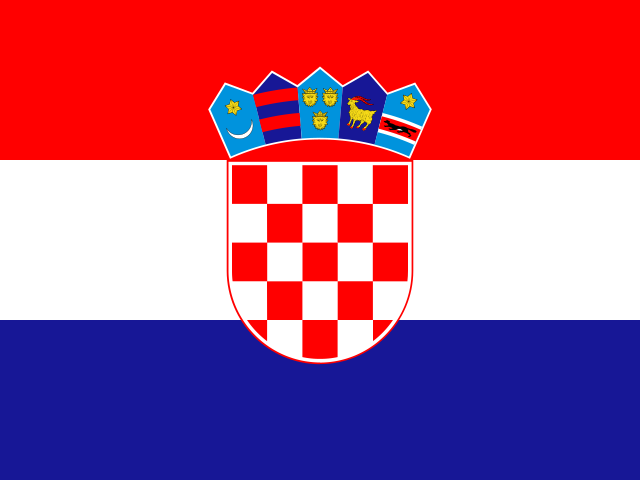
Capital Zagreb Population About 3.9 million Area About 57,000 km² GDP About $88 billion Per head About $23,000 Languages Croatian Currency Euro Government Parliamentary republic Founded 1991 Religion Roman Catholic 79% History A kingdom from 925, in union with Hungary from 1102 for eight centuries. Coastal Dalmatia was Venetian for centuries, which is why the architecture is Italian. Part of Austria-Hungary, then Yugoslavia from 1918. The Ustaše puppet state 1941–45 ran extermination camps; the war of independence 1991–95 was bitter. Joined the EU in 2013, Schengen and the euro in 2023. Who lives there About 91% Croat, with a Serb minority of 3% — down from 12% before 1991. Twenty-two recognised national minorities, each with guaranteed representation. Croatian is written in Latin script and Serbian usually in Cyrillic — the clearest visible marker between two very close languages. Culture The necktie is Croatian: cravate from Hrvat , worn by 17th-century Croatian mercenaries in French service. Klapa singing — unaccompanied male harmony from Dalmatia, UNESCO-listed.1,244 islands, and a coast that is Mediterranean while the interior is Central European. Worth knowing The šahovnica is the only chessboard on a national flag. It has over a thousand islands, and its coast is cut in two by Bosnia's 20 km outlet at Neum. The necktie takes its name from Croatian mercenaries — cravate from Hrvat . ← Bosnia and Herzegovina 7 of 7 Romania →
Core
actual drawn ∗ Serbia RS A Being everyone's neighbour, on the Danube road.
From the Serb ethnonym, first recorded in the 9th century.
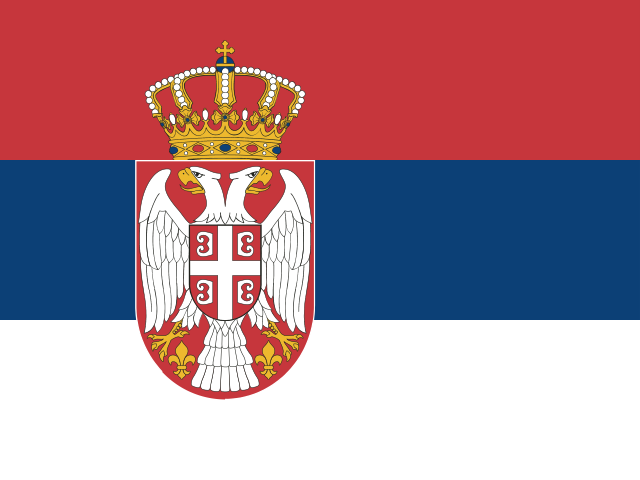
Capital Belgrade Population About 6.6 million, excluding Kosovo Area About 77,000 km², excluding Kosovo GDP About $82 billion Per head About $12,500 Languages Serbian Currency Serbian dinar Government Parliamentary republic Founded 2006 Religion Serbian Orthodox 81%, Muslim 4% History A medieval empire under Dušan in the 14th century; defeat at Kosovo in 1389 became the founding national myth. Ottoman rule for four centuries; autonomy from 1815 and independence in 1878. Its support for Slav nationalism was the immediate trigger for 1914; it lost a huge share of its population. Dominated both Yugoslavias; the 1990s wars ended with NATO bombing in 1999. EU candidate since 2012, with recognition of Kosovo the central obstacle. Who lives there About 81% Serb, with a Hungarian minority of 3% in Vojvodina. Vojvodina has six official languages, an inheritance from Habsburg rule. Serbian is officially written in Cyrillic, though Latin is used at least as much in practice. Culture Slava : each family keeps its own patron saint's day rather than name days — unique to Serbian Orthodoxy and UNESCO-listed.Kafana culture, the tavern as a place for long evenings, live music and unhurried argument.The Kosovo myth: a defeat in 1389 turned into a founding epic, and still the emotional core of Serbian nationalism. Worth knowing Belgrade sits where the Sava meets the Danube and has been fought over roughly 115 times. Its flag is Russia's inverted with an eagle added. Eight land neighbours — more than any other Balkan state. actual drawn ∗ Kosovo XK B Being the newest country in Europe, and not universally accepted as one.
From Serbian kos , "blackbird" — the Field of Blackbirds.
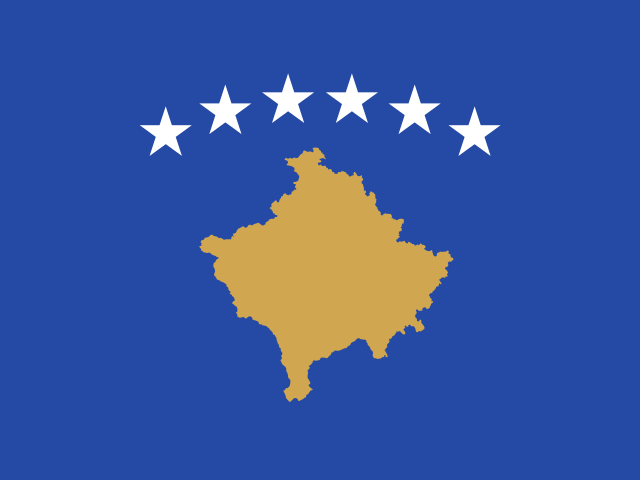
Capital Pristina Population About 1.6 million Area About 11,000 km² GDP About $11 billion Per head About $6,000 Languages Albanian, Serbian Currency Euro Government Parliamentary republic Founded 2008 Religion Muslim around 93%, with Catholic and Orthodox minorities History The 1389 Battle of Kosovo is central to Serbian national identity, though the territory became overwhelmingly Albanian. Ottoman rule until 1912, then part of Serbia and Yugoslavia. Autonomy revoked by Milošević in 1989, triggering a decade of repression and insurgency. NATO intervened in 1999; UN administration followed. Declared independence in 2008; recognised by around 100 states, not by Serbia, Russia or China. Who lives there About 93% Albanian and 2% Serb, with the Serb population concentrated in the north around Mitrovica. Before 1999 the Serb share was roughly 10%; most left after the war. Both Albanian and Serbian are official, and the population is the youngest in Europe with a median age around 30. Culture Europe's newest state, declared in 2008, recognised by about 100 UN members but not by Serbia, Russia or China. A strong diaspora culture — remittances and summer returns from Switzerland and Germany shape the calendar. Burrnesha , sworn virgins: women who took a vow of celibacy to live as men and inherit, a Kanun tradition now nearly extinct.Worth knowing The blue-and-gold flag with stars is deliberate EU mimicry — the flag is an application form. The youngest population in Europe by median age. Pristina has a Bill Clinton Boulevard with a statue on it. actual drawn ∗ North Macedonia MK C Changing its name to join two organisations.
From ancient Macedon; the name itself was the dispute.
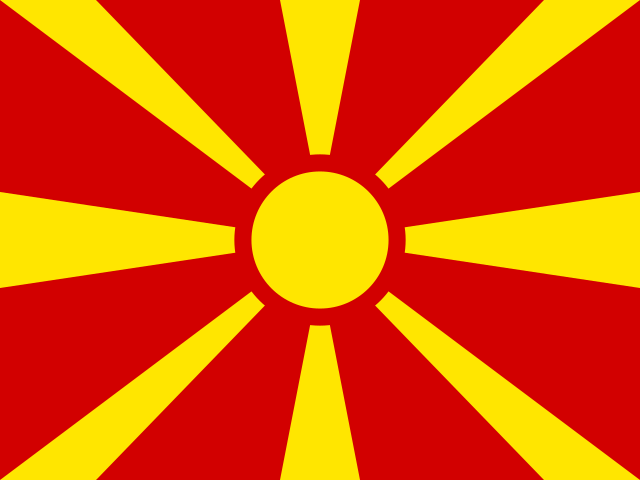
Capital Skopje Population About 1.8 million Area About 26,000 km² GDP About $16 billion Per head About $8,600 Languages Macedonian, Albanian Currency Macedonian denar Government Parliamentary republic Founded 1991 Religion Orthodox 46%, Muslim 32% History Part of ancient Macedon, then Roman, Byzantine, Bulgarian and Ottoman rule in turn. Divided between Serbia, Greece and Bulgaria after the Balkan Wars of 1912–13. Part of Yugoslavia from 1945; independent peacefully in 1991. Greece blocked its accession over the name for nearly three decades. The Prespa Agreement of 2018 renamed it North Macedonia; NATO followed in 2020. Who lives there About 58% Macedonian and 24% Albanian, with Turkish, Roma and Serb minorities. The 2001 Ohrid Agreement made Albanian co-official in municipalities where speakers exceed 20%. Macedonian is South Slavic and closest to Bulgarian — which Bulgaria has periodically disputed is a separate language at all. Culture The name dispute with Greece ran from 1991 to 2019 and blocked NATO and EU accession for 28 years. Ohrid: among the oldest lakes in the world, beside a town that once claimed 365 churches, one for each day. Teškoto , a slow men's dance from the west, danced to drum and zurla and understood as a portrait of hardship.Worth knowing It changed its flag in 1995 and its country name in 2019, both to settle disputes with Greece. Lake Ohrid is one of the oldest and deepest lakes in Europe, around three million years old. Its name, language and church have each been contested by a different neighbour. Eastern Europe & the Caucasus
Europe · tour 6 · 7 of 7 written · clockwise around the Black Sea, with the Caucasus as a southern spur
1 1. Belarus 2 2. Russia 3 3. Georgia 4 4. Azerbaijan 5 5. Armenia 6 6. Ukraine 7 7. Moldova Numbered clockwise; the dashed line is the ring and the faint one is the wrap back to the start. actual drawn ∗ Belarus BY 1 Being on the road every invasion of Russia has taken.
"White Rus" — the meaning of the "white" is disputed.
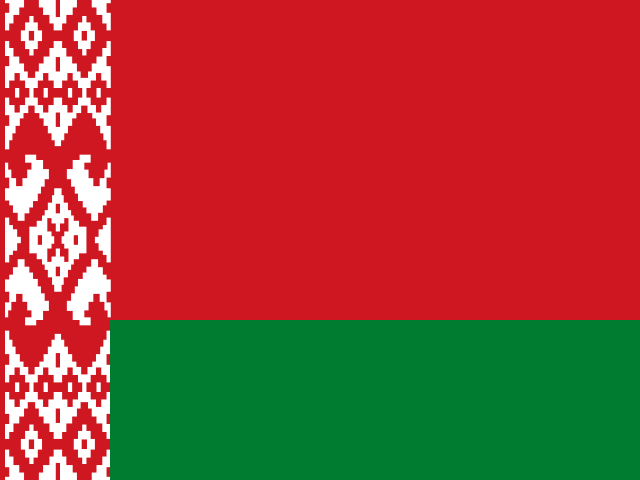
Capital Minsk Population About 9.1 million Area About 208,000 km² GDP About $73 billion Per head About $8,000 Languages Belarusian, Russian Currency Belarusian ruble Government Presidential republic in form, personal rule in practice Founded 1991 Religion Orthodox 48%, Catholic 7%, no religion or undeclared the rest History Part of the Grand Duchy of Lithuania and then the Polish-Lithuanian Commonwealth. Absorbed by the Russian Empire in the partitions of the late 18th century. Lost roughly a quarter of its population in the Second World War, the highest share of any country. Independent in 1991; Lukashenko has ruled since 1994. The 2020 protests over a disputed election were suppressed; deep dependence on Russia followed. Who lives there About 85% Belarusian and 8% Russian, with Polish and Ukrainian minorities. Russian is the language of daily life for most; Belarusian is co-official but spoken at home by a minority. Belarus lost roughly a quarter of its population in the Second World War, the highest share of any European country. Culture Kupalle , the midsummer night of fires, wreaths and fern-flower hunting, kept from pagan practice.A white-red-white flag used by the opposition and a Soviet-derived one used by the state — the flag is the argument. Chernobyl fell on Belarus rather than Ukraine: around 70% of the fallout landed here, and a fifth of farmland was contaminated. Worth knowing The only national flag carrying a strip of woven folk embroidery. Chernobyl was in Ukraine, but around 70% of the fallout landed on Belarus. Flat forest and marsh on the direct road from Warsaw to Moscow. ← Moldova 1 of 7 Russia →
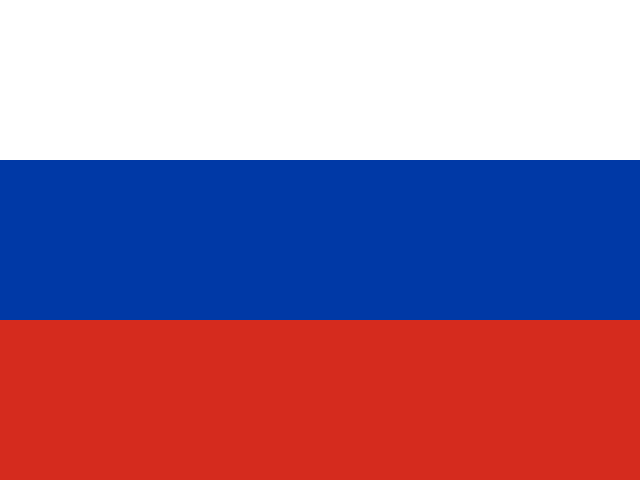
actual drawn Russia RU 2 Being the largest country on earth, by a very wide margin.
From the Rus, a Norse people who took control of Slavic river trade routes.
Capital Moscow Population About 144 million Area 17.1 million km² GDP About $2.2 trillion Per head About $15,000 Languages Russian Currency Russian ruble Government Federal presidential republic in form Founded 1991 Religion Russian Orthodox around 63% by identification, Muslim 7%, no religion 26% History Kyivan Rus, then the Mongol yoke from 1237, then the rise of Moscow. Peter the Great forcibly westernised the state and moved the capital to St Petersburg in 1712. Serfdom abolished in 1861; defeat and strain produced the revolutions of 1917. The USSR industrialised at enormous human cost, took the largest losses of the Second World War, and dissolved in 1991. Putin in power since 1999; annexed Crimea in 2014 and invaded Ukraine in 2022. Who lives there About 78% Russian, with over 190 recognised ethnic groups — Tatars, at 3.9%, are the largest minority. Twenty-two republics named for titular nationalities, each with an official language alongside Russian. Islam is the second religion at perhaps 10-15%, concentrated in Tatarstan, Bashkortostan and the North Caucasus. Culture The dacha : a summer plot outside the city, and for much of the 20th century the difference between eating well and not. A literary canon treated as national property — Pushkin's birthday is a public event, and poetry is memorised at school. The banya , and a hospitality that arrives as insistence rather than as offer. Worth knowing Eleven time zones, and it borders fourteen countries. Three quarters of the land is in Asia and three quarters of the people are in Europe. Peter the Great copied the Dutch flag in the shipyards and reordered the stripes. ← Belarus 2 of 7 Georgia →
actual drawn ∗ Georgia GE 3 An alphabet nobody else uses, eight thousand years of wine, and the Caucasus wall along its northern edge.
English "Georgia" comes by way of Persian gurğ and was folk-attached to St George; Georgians call it Sakartvelo , the land of the Kartvelians.
Capital Tbilisi Population About 3.7 million Area About 70,000 km² GDP About $33 billion Per head About $9,000 Languages Georgian Currency Georgian lari Government Parliamentary republic since 2018, having moved away from a… Founded 1991 Religion Georgian Orthodox 84%, Muslim 11% History The kingdoms of Colchis and Iberia; Christianity adopted as the state religion around 337, among the earliest anywhere. Golden age under David IV (1089–1125) and Queen Tamar (1184–1213), ended by the Mongol invasions of the 1230s. Three centuries divided between Ottoman and Persian spheres, until Russia annexed the eastern kingdom from 1801. Independent 1918–21, then invaded by the Red Army and held in the Soviet Union until 1991. The Rose Revolution of 2003 turned it west; the 2008 war with Russia left Abkhazia and South Ossetia outside Tbilisi's control. Who lives there About 87% Georgian, with Azerbaijani (6%) and Armenian (5%) minorities. Abkhazia and South Ossetia, roughly 20% of the territory, are outside government control and their populations are not counted. Georgian is Kartvelian — its own language family, unrelated to Indo-European or Turkic, with its own alphabet. Culture The supra , a feast run by a tamada who leads formal toasts in sequence; it is a structure, not a party. Polyphonic singing in three independent voices — the oldest documented polyphony in the world, and UNESCO-listed. Wine in buried clay qvevri : an unbroken 8,000-year tradition and a separate technique from European winemaking. Worth knowing The Georgian script is one of a bare handful in current use that was invented outright rather than adapted from another alphabet. Wine has been made here for roughly 8,000 years, fermented underground in clay qvevri — the oldest continuous winemaking tradition known. Ushguli, at about 2,100 m in the Svaneti mountains, is among the highest permanently inhabited villages in Europe. ← Russia 3 of 7 Azerbaijan →
actual drawn ∗ Azerbaijan AZ 4 Caspian oil, and hillsides that have been on fire for as long as anyone has recorded.
Usually traced to Atropates, the satrap who kept the region after Alexander — Atropatene , the land of Atropates.
Capital Baku Population About 10 million Area About 87,000 km² GDP About $75 billion Per head About $7,300 Languages Azerbaijani Currency Azerbaijani manat Government Presidential republic Founded 1991 Religion Muslim around 96%, roughly two thirds Shia History Arab conquest in the 7th century brought Islam; Turkic migration between the 11th and 13th centuries replaced the language. The Shirvanshahs ruled from Baku for some six centuries before Safavid Persia took the region from 1501. The treaties of Gulistan (1813) and Turkmenchay (1828) handed the north to Russia and split Azerbaijanis between two empires — most still live in Iran. Baku's oil boom made it the source of roughly half the world's oil by 1900; in 1918 it declared the first secular parliamentary republic in the Muslim world, and lost it in 1920. Independent in 1991; two wars with Armenia over Nagorno-Karabakh ended with Azerbaijan retaking the territory in 2023. Who lives there About 92% Azerbaijani, with Lezgin, Russian and Talysh minorities. Azerbaijani is Turkic and close to Turkish; the script has changed four times in a century. Around twice as many Azerbaijanis live in Iran as in Azerbaijan, a legacy of the 1828 partition. Culture Mugham : a modal improvised music, UNESCO-listed, closer to Persian and Arabic traditions than to anything European.Predominantly Shia Islam but strongly secular in practice, a legacy of Soviet rule and of the 1918 republic. Carpet weaving as a regional art with seven recognised schools, and patterns that read as documents. Worth knowing Yanar Dag outside Baku has burned continuously on a natural gas seep for decades, and such fires are the likely root of Zoroastrian fire worship here. Around 400 mud volcanoes sit within its borders — roughly half of all those known on earth. Its Caspian coast leads nowhere: the Caspian is a lake, so Azerbaijan has a shoreline and still no route to the open ocean. ← Georgia 4 of 7 Armenia →
actual drawn Armenia AM 5 The first state to adopt Christianity, and a national mountain that sits over the border.
From Old Persian Armina ; Armenians call it Hayastan , after Hayk, the patriarch of the founding legend.
Capital Yerevan Population About 3 million Area About 30,000 km² GDP About $25 billion Per head About $8,500 Languages Armenian Currency Armenian dram Government Parliamentary republic since a 2015 referendum moved power from… Founded 1991 Religion Armenian Apostolic 92% History Adopted Christianity as the state religion in 301, by tradition the first kingdom in the world to do so. Mesrop Mashtots devised the Armenian alphabet around 405, fixing church, language and nation together in one act. Partitioned repeatedly between Byzantium and Persia, then between the Ottomans and Persia; the eastern half passed to Russia in 1828. The genocide of 1915–23 killed around 1.5 million Armenians under Ottoman rule and created the modern diaspora. Independent 1918–20, Soviet until 1991; lost the Nagorno-Karabakh war in 2020 and the enclave itself in 2023. Who lives there About 98% Armenian — the most homogeneous country in Europe or the Caucasus. The diaspora is roughly twice the resident population, concentrated in Russia, the United States and France. Armenian is its own branch of Indo-European, with an alphabet devised in 405 specifically for it. Culture The khachkar : carved cross-stones, no two alike, of which thousands survive and thousands were destroyed. The duduk , a double-reed apricot-wood pipe with a sound taken as the national voice; UNESCO-listed. The genocide as the organising fact of modern identity, commemorated on 24 April and central to relations with Turkey. Worth knowing Yerevan was founded as the fortress of Erebuni in 782 BC, which makes it older than Rome and able to prove it from a dated foundation stone. Mount Ararat is the national symbol and stands on the coat of arms, but has been inside Turkey since 1921 and is visible from Yerevan across a closed border. The Tatev aerial tramway runs 5.7 km in one unbroken span, the longest reversible cable car in the world. ← Azerbaijan 5 of 7 Ukraine →
actual drawn Ukraine UA 6 The black-earth breadbasket, and the war being fought over it.
Commonly read as "borderland", though the derivation is contested.
Capital Kyiv Population Roughly 38 million on paper, but the true figure is unusually… Area About 604,000 km² GDP About $190 billion Per head About $5,500 Languages Ukrainian Currency Hryvnia Government Semi-presidential republic Founded 1991 Religion Orthodox around 65%, split between the Orthodox Church of Ukraine and the… History Kyivan Rus (9th–13th c.) is claimed as ancestral by Ukraine, Russia and Belarus alike — the dispute is not academic. Cossack polities in the 17th century, then absorption into the Russian Empire. The Holodomor famine of 1932–33 killed millions and is recognised by many states as genocide. Independence in 1991 with the collapse of the USSR; gave up the world's third-largest nuclear arsenal in 1994. The Maidan revolution in 2014, Russian annexation of Crimea, and full-scale invasion in 2022. Who lives there About 78% Ukrainian and 17% Russian by the 2001 census — the last one held, and badly out of date. Language and ethnicity do not line up: many ethnic Ukrainians spoke Russian at home, and the war has shifted that sharply. Crimean Tatars, deported wholesale in 1944 and returned after 1989, are recognised as an indigenous people. Culture The vyshyvanka , an embroidered shirt whose patterns are regional, now worn as a political statement as much as a folk one. Kobzari — blind itinerant bards who carried the epic tradition, and were largely killed under Stalin.Borshch was UNESCO-listed as Ukrainian in 2022, in a decision everyone understood as being about more than soup.Worth knowing The largest country lying wholly within Europe. Its flag is literally a photograph of the country: blue sky over a wheat field. Kyiv is the Ukrainian transliteration and Kiev the Russian one — the spelling is a political statement. ← Armenia 6 of 7 Moldova →
actual drawn ∗ Moldova MD 7 Wine cellars measured in kilometres, and a breakaway strip nobody recognises.
From the river Moldova, itself of uncertain origin.
Capital Chisinau Population About 2.4 million, excluding Transnistria Area About 34,000 km² GDP About $17 billion Per head About $6,700 Languages Romanian Currency Moldovan leu Government Parliamentary republic Founded 1991 Religion Orthodox 90%, split between the Moldovan and Bessarabian metropolitanates History The Principality of Moldavia was an Ottoman tributary from the 16th century. Its eastern half, Bessarabia, was annexed by Russia in 1812. Passed between Romania and the USSR through the 20th century. Independent in 1991; a short war left Transnistria de facto separate. Granted EU candidate status in 2022. Who lives there About 75% Moldovan and 7% Romanian — a distinction that is political, since the language is the same. Ukrainians (7%), Russians (4%) and Gagauz (4.5%), a Turkic-speaking Orthodox people with their own autonomous region. Transnistria, with around 350,000 people, has been outside government control since 1992. Culture Wine: the largest cellars in the world at Mileștii Mici, 200 km of tunnels, and viticulture as national identity. The hora , a circle dance shared with Romania, and a folk music near-identical across the border. A constant unresolved argument about whether Moldovan identity is Romanian, which surfaces in every census and election. Worth knowing Mileștii Mici holds the world's largest wine collection in about 200 km of tunnels. Transnistria has its own currency, army and parliament, and is recognised by no UN member. Its flag is Romania's with an aurochs added — that bull is the only difference. ← Ukraine 7 of 7 Belarus →
Anatolia & the Levant
Asia · tour 7 · 7 of 7 written · clockwise around the eastern Mediterranean
1 1. Turkey 2 2. Syria 3 3. Jordan 4 4. Israel 5 5. Palestine 6 6. Lebanon 7 7. Cyprus Numbered clockwise; the dashed line is the ring and the faint one is the wrap back to the start. actual drawn ∗ Turkey TR 1 Straddling two continents, and a capital that is not its great city.
From medieval Latin Turchia , the land of the Turks. Officially Türkiye since 2022, a change the UN accepted.
Capital Ankara Largest city Istanbul Population About 86 million Area About 780,000 km² GDP About $1.35 trillion Per head About $15,700 Languages Turkish; Kurdish widely spoken in the south-east Currency Turkish lira Government Presidential republic since a 2017 referendum abolished the… Founded 1923 Religion Sunni Muslim around 80% and Alevi perhaps 15% History Anatolia held Hittites, Greeks, Persians and Romans in turn; Constantinople was the Roman capital for a thousand years after Rome fell. Turkic migration after Manzikert in 1071 changed the language; the Ottomans took Constantinople in 1453 and ruled from the Balkans to Yemen. Defeat in 1918 and partition by the Allies produced a war of independence and the republic in 1923, under Mustafa Kemal Atatürk. Atatürk's reforms replaced the caliphate with a secular state, Arabic script with Latin, and Islamic law with Swiss and Italian codes. NATO member since 1952, an EU candidate since 1999 with negotiations frozen, and under Erdoğan since 2003 a steadily more presidential state. Who lives there Around 70-75% Turkish and 15-20% Kurdish, the largest stateless nation in the world split across four countries. It hosts about 3 million Syrian refugees, more than any other state. The Greek, Armenian and Jewish communities of Anatolia, once millions, now number a few tens of thousands between them. Culture Tea, not coffee, is the everyday drink — the highest consumption per head in the world, served in tulip glasses. The hamam , and a hospitality that treats refusing food as the rudeness rather than accepting it. Football as civic identity, and three Istanbul clubs whose rivalry organises the city. Worth knowing Istanbul is the only city on two continents, and the Bosphorus carries more oil than the Suez Canal. Göbekli Tepe in the south-east is a monumental site from around 9500 BC — older than agriculture, pottery or writing. The Turkish language was written in Arabic script until 1928, when it changed to Latin in the space of a few months. ← Cyprus 1 of 7 Syria →
actual drawn ∗ Syria SY 2 Damascus, one of the oldest continuously inhabited cities on earth, and a war that emptied half the country.
From Greek Syria , probably a shortening of Assyria, though the two are not the same place.
Capital Damascus Population About 23 million inside the country, after some six million left Area About 185,000 km² GDP Perhaps $9 billion, and the figure is close to meaningless Per head Under $500 by most estimates Languages Arabic; Kurdish, Armenian and Aramaic in places Currency Syrian pound Government Transitional government since December 2024, when the Assad… Founded 1946 Religion Sunni Muslim around 74%, with Alawite (about 10%), Christian, Druze and… History Damascus and Aleppo are among the oldest cities anywhere; the Umayyad caliphate ruled the Islamic world from Damascus in the 7th and 8th centuries. Ottoman from 1516; a French mandate after 1920 drew the modern borders and separated Lebanon from it. Independent in 1946, then two decades of coups until the Ba'ath party and Hafez al-Assad took power in 1970. The Assads ruled for 54 years, an Alawite minority governing a Sunni majority, with the 1982 destruction of Hama as the template. The 2011 uprising became a war that killed perhaps half a million and displaced thirteen million; the regime fell in December 2024. Who lives there Around 74% Sunni Arab, with Alawite, Christian, Druze and Ismaili minorities, and Kurds about 10% in the north-east. Roughly half the pre-war population was displaced — some six million abroad and as many again inside the country. Aramaic, the language of the Roman Levant, is still spoken in a handful of villages near Maaloula. Culture The Damascus souk and a craft tradition — damask cloth, inlaid wood, steel — that gave several English words their names. Aleppo's musical tradition, the qudud halabiya , and a claim to the best food in the Arab world that Syrians make without hedging. An unusually strong tradition of religious coexistence in the cities, which the war tested to destruction and has not entirely ended. Worth knowing The Umayyad Mosque in Damascus has been a temple to Hadad, a temple to Jupiter, a cathedral and a mosque, on the same footprint. Krak des Chevaliers is the best-preserved crusader castle anywhere, and was shelled in 2013. Palmyra's monumental ruins were deliberately blown up by Islamic State in 2015, and its retired chief archaeologist was murdered defending them. ← Turkey 2 of 7 Jordan →
actual drawn ∗ Jordan JO 3 Petra, and a stability nobody around it has managed.
From the River Jordan; the Semitic root suggests to descend , which the river does, to the lowest land on earth.
Capital Amman Population About 11 million, a third of them refugees or their descendants Area About 89,000 km², four fifths of it desert GDP About $53 billion Per head About $4,700 Languages Arabic Currency Jordanian dinar Government Constitutional monarchy, with the king holding real executive… Founded 1946 Religion Sunni Muslim around 95%, with a Christian minority of about 2% that holds… History The Nabataeans cut Petra out of the rock and grew rich taxing the incense road until Rome annexed them in AD 106. Ottoman until 1918, then the British mandate of Transjordan under the Hashemite Abdullah, a son of the Sharif of Mecca. Independent in 1946. It took the West Bank in the 1948 war and lost it in 1967, along with East Jerusalem. In 1970 it expelled the PLO after a civil war — Black September — and renounced its West Bank claim in 1988. It made peace with Israel in 1994, the second Arab state to do so, and has absorbed wave after wave of refugees ever since. Who lives there Around 95% Arab, but perhaps half the population is of Palestinian origin, from 1948, 1967 and after. It hosts roughly 700,000 registered Syrian refugees and around 2 million registered Palestinian refugees — among the highest ratios on earth. A small Circassian and Chechen community, settled by the Ottomans in the 19th century, is disproportionately present in the army and state. Culture Mansaf : lamb cooked in fermented dried yoghurt over rice, eaten from a shared tray with the right hand, and the national dish by law of custom.Bedouin descent as a source of political legitimacy, and a monarchy that traces itself to the Prophet's family. Coffee poured from a dallah into a small cup filled a third full, and refilled until you shake the cup. Worth knowing The Dead Sea shore is the lowest dry land on earth, around 430 m below sea level, and the sea itself is shrinking by about a metre a year. It is one of the most water-scarce countries in the world, with a fraction of the per-head supply of anywhere in Europe. Wadi Rum has stood in for Mars in so many films that the tourist board leans on it. ← Syria 3 of 7 Israel →
actual drawn ∗ Israel IL 4 A state founded in 1948 on a promise and a war, and every question about it still open.
From the biblical name given to Jacob, traditionally read as he who struggles with God .
Capital Jerusalem — declared by Israel, not recognised as such by most states, which keep their embassies in Tel Aviv. Population About 10 million citizens, plus roughly 5 million Palestinians… Area About 22,000 km² GDP About $530 billion Per head About $53,000 Languages Hebrew; Arabic has special status Currency Israeli new shekel Government Parliamentary republic with strict proportional representation… Founded 1948 Religion Jewish around 73%, Muslim 18%, Christian and Druze about 2% each History Zionism from the 1880s built settlements under Ottoman and then British rule; the 1917 Balfour Declaration promised a national home. The UN partition plan of 1947 was accepted by Jewish leaders and rejected by Arab ones; Israel declared independence in May 1948. The war that followed established the state and displaced around 750,000 Palestinians — the Nakba — who were not allowed to return. The 1967 war took the West Bank, Gaza, Sinai, the Golan and East Jerusalem, and the occupation of the first two continues. Peace with Egypt in 1979 and Jordan in 1994; the Oslo accords of the 1990s created the Palestinian Authority and did not create a state. Who lives there About 73% Jewish and 21% Arab, the latter being Palestinians who remained in 1948 and their descendants, who hold citizenship. The Jewish population is itself divided between Ashkenazi, Mizrahi and Ethiopian origins, and between secular and Haredi, which drives most domestic politics. Around 5 million Palestinians live under Israeli control in the West Bank and Gaza without Israeli citizenship. Culture Hebrew was a liturgical language with no native speakers for centuries and was deliberately revived as a spoken one — the only case of its kind. Military service is near-universal for Jewish citizens, which shapes the life course, the slang and the social network. Shabbat stops public transport and most commerce nationally from Friday afternoon, whether or not you observe it. Worth knowing Jerusalem is its declared capital; most states do not recognise that and keep their embassies in Tel Aviv. It has among the highest research spending per head in the world, and more companies on NASDAQ than any country outside the US and China. The Dead Sea Scrolls, found in caves at Qumran from 1947, are the oldest known biblical manuscripts by about a thousand years. ← Jordan 4 of 7 Palestine →
actual drawn Palestine PS 5 A state recognised by most of the world and in control of very little of its territory.
From Greek and Latin Palaestina , itself from the Philistines, applied to the region by Rome after AD 135.
Capital Ramallah is the administrative seat; East Jerusalem is the declared capital and is under Israeli control. Population About 5.5 million in the West Bank and Gaza Area About 6,000 km² GDP About $17 billion before 2023, and a fraction of that now Per head About $3,000, and far lower in Gaza Languages Arabic Currency Israeli new shekel, Jordanian dinar Government Semi-presidential in form, and divided in practice Founded 1988 Religion Sunni Muslim around 98%, with a Christian minority concentrated in Bethlehem… History Under Ottoman rule until 1918, then the British Mandate for Palestine, during which Jewish immigration and Arab resistance both grew. The 1948 war left no Palestinian state: the West Bank went to Jordan, Gaza to Egypt, and around 750,000 people became refugees. Israel occupied both territories in 1967. The PLO, founded in 1964, declared independence from exile in 1988. The Oslo accords in 1993 created the Palestinian Authority with limited self-rule; the promised final settlement never came. Hamas won the 2006 election and took Gaza in 2007, splitting the territories; the war after October 2023 destroyed most of Gaza. Who lives there Around 5.5 million in the West Bank and Gaza, with a global Palestinian population of perhaps 14 million, most of them outside historic Palestine. UNRWA registers about 6 million Palestinian refugees across the region, a status inherited by descent since 1948. Overwhelmingly Sunni Muslim, with a Christian minority in Bethlehem and Ramallah that has shrunk sharply through emigration. Culture Tatreez : cross-stitch embroidery whose patterns identify a village, and which became a national symbol once the villages were gone.The keffiyeh , once ordinary rural headgear, now the most recognisable political garment in the world. Olive cultivation as inheritance and as argument — trees are counted, defended and uprooted, and their age is evidence. Worth knowing It is recognised as a state by around 150 UN members and holds non-member observer status at the UN. Ramallah is the administrative seat; East Jerusalem is the declared capital and is under Israeli control. Gaza is one of the most densely populated places on earth, and had been under blockade since 2007 before the destruction of 2023-24. ← Israel 5 of 7 Lebanon →
actual drawn ∗ Lebanon LB 6 A cedar on the flag, eighteen official sects, and a currency that lost 98% of its value.
From the Semitic root lbn , white — the snow on Mount Lebanon, which is visible from the sea.
Capital Beirut Population About 5.5 million, including roughly 1.5 million Syrian refugees Area About 10,000 km² GDP About $25 billion, down from roughly $55 billion in 2018 Per head About $4,500, down from roughly $9,000 before the collapse Languages Arabic; French and English widely used Currency Lebanese pound Government Parliamentary republic with offices divided by sect: a Maronite… Founded 1943 Religion Roughly 65% Muslim, split between Shia and Sunni, and 32% Christian, mostly… History The Phoenician cities — Tyre, Sidon, Byblos — ran the Mediterranean trade and gave the alphabet to Greece. Mount Lebanon sheltered Maronite Christians and Druze for centuries under loose Ottoman rule, with autonomy after 1861. France created Greater Lebanon in 1920 by adding Muslim-majority coast and valley to the Christian mountain, which set the demographic problem. Independence in 1943 came with an unwritten pact dividing offices by sect, based on a census taken in 1932 and never repeated. Civil war from 1975 to 1990, Israeli and Syrian occupation, and since 2019 a financial collapse the World Bank called one of the worst since 1850. Who lives there No census since 1932, deliberately: counting would force the confessional settlement to be renegotiated. Estimated at roughly 65% Muslim, split between Shia and Sunni, and 32% Christian, mostly Maronite. It hosts more refugees per head than any country on earth — around 1.5 million Syrians on a population of 5.5 million. Culture A diaspora far larger than the resident population, and remittances that have propped up the economy for a century. Beirut's reputation for nightlife and publishing survived a fifteen-year civil war, which says something about both. Mezze extended until the table has no space, and an argument with every neighbour about who invented hummus.Worth knowing The cedar on the flag is nearly extinct in the wild — a few groves remain of forests that supplied Egypt and Solomon. The 2020 Beirut port explosion, from ammonium nitrate stored for six years, was among the largest non-nuclear blasts ever recorded. Byblos has been continuously inhabited for about 7,000 years and gave its name, via Greek, to the Bible. ← Palestine 6 of 7 Cyprus →
actual drawn ∗ Cyprus CY 7 A capital still divided by a green line drawn in 1974.
The island gave its name to copper, not the other way round.
Capital Nicosia Population About 1.3 million across the whole island Area About 9,300 km² GDP About $34 billion Per head About $37,000 Languages Greek, Turkish Currency Euro Government Presidential republic Founded 1960 Religion Greek Orthodox around 89% in the south History Copper made it valuable to every Bronze Age power; ruled in turn by nearly all of them. Venetian, then Ottoman from 1571, then British administration from 1878. Independence in 1960 with a power-sharing constitution that broke down within three years. A Greek-backed coup in 1974 triggered Turkish invasion and partition, which still stands. The Republic joined the EU in 2004; EU law is suspended in the north. Who lives there About 75% Greek Cypriot and 10% Turkish Cypriot, but the island has been divided since 1974 and no joint census exists. The north has been settled from mainland Turkey since 1974, substantially changing its composition. Both Greek and Turkish are official; a distinct Cypriot Greek dialect is what is actually spoken. Culture The Green Line, a UN buffer zone since 1964, runs through the middle of Nicosia — the last divided capital in Europe. Meze extended to twenty or thirty small dishes, and halloumi, which holds PDO status and is the national export.Two British Sovereign Base Areas remain UK territory, a leftover of the 1960 independence settlement. Worth knowing Nicosia is the last divided capital in Europe. The UK retains two Sovereign Base Areas that are legally British territory. The flag deliberately uses neither Greek blue nor Turkish red — it uses copper. ← Lebanon 7 of 7 Turkey →
Arabia & the Gulf
Asia · tour 8 · 9 of 9 written · clockwise around the Arabian Peninsula
1 1. Iraq 2 2. Iran 3 3. Kuwait 4 4. Bahrain 5 5. Qatar 6 6. United Arab Emirates 7 7. Oman 8 8. Yemen A A. Saudi Arabia Numbered clockwise; the dashed line is the ring and the faint one is the wrap back to the start. Lettered stops sit in the core, off the ring. Rim
actual drawn ∗ Iraq IQ 1 Mesopotamia — where writing, the wheel and the city were invented, and where most of them were dug up again.
Probably from Arabic al-'Iraq , the shore or the well-rooted country; possibly from Sumerian Uruk.
Capital Baghdad Population About 46 million, and growing fast Area About 440,000 km² GDP About $265 billion, almost all of it oil Per head About $5,700 Languages Arabic and Kurdish, both official Currency Iraqi dinar Government Federal parliamentary republic, with Kurdistan holding real… Founded 1932 Religion Shia Muslim around 60% and Sunni around 35%, with small Christian, Yazidi and… History Sumer, Akkad, Babylon and Assyria all rose between the Tigris and Euphrates; writing, the wheel and the first law codes are from here. Baghdad was founded in 762 and became the largest city in the world and the centre of the Abbasid caliphate, until the Mongols destroyed it in 1258. Ottoman from 1534; Britain took it in the First World War and stitched three provinces into one mandate, then a kingdom in 1932. Republic by coup in 1958, Ba'ath party from 1968, Saddam Hussein from 1979 — then war with Iran, the invasion of Kuwait, and sanctions. The 2003 US-led invasion removed Saddam and produced insurgency, sectarian war, and the rise and defeat of Islamic State. Who lives there Around 60% Shia Arab, 20% Sunni Arab and 17% Kurdish, with Turkmen, Assyrian and Yazidi minorities. Iraqi Kurdistan has been effectively autonomous since 1991 and has its own government, army and language policy. The Jewish community of Baghdad was about a third of the city in 1900 and now numbers in single figures. Culture The maqam al-iraqi , a sung poetic form UNESCO lists, performed in coffee houses that also host the arguments. Date palms — once thirty million of them, and still the crop the country is named for in half the region's poetry. A reverence for the Abbasid past that is genuinely popular rather than official, and shows up in ordinary speech. Worth knowing The Marsh Arabs' wetlands were drained by Saddam as collective punishment and have been partially reflooded since 2003. The National Museum was looted in 2003; thousands of objects are still missing, and some have been returned by auction houses. Iraq has the world's fifth-largest proven oil reserves and among the least reliable electricity supplies. ← Yemen 1 of 8 Iran →
actual drawn ∗ Iran IR 2 A civilisation older than Islam, a revolution younger than the Beatles, and neither fits the other comfortably.
From Eran , land of the Aryans, used since the Sasanian period. Called Persia abroad until Reza Shah asked for Iran in 1935.
Capital Tehran Population About 90 million Area About 1,650,000 km² GDP About $400 billion, and hard to state Per head About $4,500 at the official rate, and lower at the real one Languages Persian; Azerbaijani, Kurdish and Arabic widely spoken Currency Iranian rial Government Islamic republic: an elected president and parliament under a… Founded 1979 Religion Shia Muslim around 90-95%, Sunni 5-10%, with recognised Christian, Jewish and… History Cyrus founded the Achaemenid empire around 550 BC — the first to span three continents, and the first with a stated policy of tolerating local religion. Conquered by the Arabs in the 7th century and converted to Islam, but kept its language, which almost nowhere else in the region did. The Safavids made it Shia by decree from 1501, permanently separating it from the Sunni Ottoman world next door. Britain and Russia carved out spheres of influence; the elected Mosaddegh was overthrown by a British and American coup in 1953. The 1979 revolution replaced the Shah with an Islamic republic under Khomeini, followed by eight years of war with Iraq. Who lives there Around 61% Persian, 16% Azerbaijani, 10% Kurdish, with Lur, Arab, Baloch and Turkmen minorities. There are more Azerbaijanis in Iran than in Azerbaijan, and the Supreme Leader is one of them. About two thirds of the population is urban, and the median age is around 33 after one of the fastest fertility declines ever recorded. Culture Poetry as everyday reference: Hafez and Rumi are quoted in ordinary conversation, and people consult Hafez by opening him at random. Nowruz , the Zoroastrian new year at the spring equinox, is the biggest holiday and predates Islam by a thousand years.Ta'arof : an elaborate ritual of offering and refusing that governs everything from taxi fares to job offers.Worth knowing Persepolis was burned by Alexander in 330 BC and the ruins are still standing. It holds the world's second-largest natural gas reserves and the third-largest oil reserves. The qanat , an underground irrigation channel, has watered the plateau for three thousand years and some are still in use. ← Iraq 2 of 8 Kuwait →
actual drawn Kuwait KW 3 Being invaded in 1990, and the parliament that other Gulf monarchies do not have.
A diminutive of Arabic kut , a fort by water.
Capital Kuwait City Population About 4.9 million, of whom only around 1.5 million are citizens Area About 18,000 km² GDP About $160 billion Per head About $33,000 Languages Arabic Currency Kuwaiti dinar Government Constitutional emirate with the oldest elected parliament in… Founded 1961 Religion Among citizens, Sunni around 60-70% and Shia 30-40% History Founded as a fishing and pearling settlement in the 18th century by the Bani Utub; the Al Sabah family have ruled since 1752. A British protectorate from 1899, chosen to keep the Ottomans and later the Germans out of the head of the Gulf. Oil was found in 1938 and exported from 1946; the country went from pearl-diving to the highest income in the world within a generation. Independent in 1961, and immediately claimed by Iraq — a claim Britain and then the Arab League saw off. Iraq invaded and annexed it in August 1990; a coalition expelled them in February 1991, and the retreating army set 700 oil wells alight. Who lives there Only about 30% of residents are Kuwaiti citizens; the rest are migrant workers, mostly Indian, Egyptian and Bangladeshi. Around 100,000 bidoon are stateless — long-resident families whose citizenship was never recognised. Citizens are roughly 60-70% Sunni and 30-40% Shia, a larger Shia share than any Gulf state but Bahrain and Iraq. Culture The diwaniya : a regular evening gathering in a room off the house where politics is actually done, and which survived the occupation. Pearl diving as national memory — the fleet, the songs and the debt system are taught as the pre-oil world. A publishing and theatre tradition that made Kuwait the cultural centre of the Gulf before the invasion. Worth knowing The Kuwaiti dinar is the highest-valued currency unit in the world. The oil fires of 1991 burned for eight months and were visible from orbit. It has the oldest elected parliament in the Gulf, from 1963, and the emir has dissolved it repeatedly. ← Iran 3 of 8 Bahrain →
actual drawn Bahrain BH 4 The first Gulf state to find oil and the first to run out, and an island connected to Saudi Arabia by a causeway.
Arabic for the two seas — fresh springs rising within the salt sea around the island.
Capital Manama Population About 1.6 million Area About 780 km² GDP About $46 billion Per head About $29,000 Languages Arabic Currency Bahraini dinar Government Constitutional monarchy, with an elected lower house and an… Founded 1971 Religion A Shia majority among citizens, ruled by a Sunni monarchy History Dilmun, a trading civilisation linking Mesopotamia and the Indus, was here from about 3000 BC, and its burial mounds still cover the island. A pearling centre for millennia; Portuguese, then Persian, then under the Al Khalifa family from 1783. A British protectorate from 1861 and the first place in the Gulf to strike oil, in 1932. Independent in 1971 when Britain withdrew from east of Suez, along with Qatar and the UAE. The 2011 uprising, largely by the Shia majority, was suppressed with Saudi and Emirati troops crossing the causeway. Who lives there Around half the residents are foreign nationals; among citizens the majority is Shia, ruled by a Sunni monarchy. That mismatch — a Shia majority and a Sunni ruling family — is the central fact of Bahraini politics. It has the smallest population of any Arab state, and the highest share of women in the workforce in the Gulf. Culture Pearling: the trail of oyster beds, boats and merchant houses is UNESCO-listed as the last intact example anywhere. The Formula One Grand Prix, the first in the Middle East, held since 2004. A relative social liberalism — alcohol, cinemas, mixed workplaces — that draws weekend traffic across the causeway. Worth knowing The King Fahd Causeway to Saudi Arabia is 25 km long and carries enormous Thursday-night traffic. Its oil ran low decades ago; the economy moved to banking and aluminium smelting before anyone else had to. The Tree of Life stands alone in the desert with no obvious water source and is about 400 years old. ← Kuwait 4 of 8 Qatar →
actual drawn Qatar QA 5 Gas, Al Jazeera, and a World Cup that cost more than every previous one combined.
Recorded by Pliny as Catharrei ; the local pronunciation is closer to Gitar .
Capital Doha Population About 3 million, of whom roughly 300,000 are citizens Area About 11,600 km² GDP About $220 billion, from the largest single gas field in the… Per head About $73,000 Languages Arabic Currency Qatari riyal Government Absolute monarchy under the Al Thani, with an advisory council… Founded 1971 Religion Sunni Muslim, following the same Wahhabi tradition as Saudi Arabia, though… History A pearling and fishing coast under Bahraini and then Ottoman influence; the Al Thani family emerged as rulers in the 19th century. A British protectorate from 1916, and independent in 1971 after declining to join the UAE federation. The North Field, found in 1971, turned out to be the largest single gas field in the world, shared with Iran. Sheikh Hamad deposed his father in 1995 and founded Al Jazeera the next year, which changed Arab broadcasting and made enemies. Saudi Arabia, the UAE, Bahrain and Egypt blockaded it from 2017 to 2021; it did not concede and the blockade was lifted. Who lives there Only about 12% of residents are Qatari citizens — the lowest native share of any country on earth. The workforce is overwhelmingly South Asian, and the kafala sponsorship system that governed it drew sustained criticism before 2022. Citizens are Sunni, largely following the same Wahhabi tradition as Saudi Arabia, though applied far more loosely. Culture Falconry, camel racing and pearl-diving heritage maintained as deliberate state policy against a population that is 88% foreign. Al Jazeera, founded 1996, which broke the state-broadcaster monopoly across the Arab world and is resented accordingly. Museum-building as foreign policy: the Museum of Islamic Art and the National Museum were commissioned from Pei and Nouvel. Worth knowing It has the highest GDP per head in the world by some measures, and the smallest citizen body of any wealthy state. It is a peninsula with exactly one land border, and that border was closed for three and a half years. The 2022 World Cup was played in November because summer temperatures reach 50°C. ← Bahrain 5 of 8 United Arab Emirates →
actual drawn United Arab Emirates AE 6 Dubai, which is not the capital, and a federation that held together when others did not.
A description rather than a name: seven emirates federated in 1971.
Capital Abu Dhabi Largest city Dubai Population About 11 million, of whom roughly 1.2 million are citizens Area About 84,000 km² GDP About $545 billion Per head About $49,000 Languages Arabic; English is the working language of business Currency UAE dirham Government A federation of seven absolute monarchies Founded 1971 Religion Sunni Muslim among citizens History The Trucial Coast — a set of sheikhdoms that signed maritime truces with Britain from 1820 to stop raiding on shipping. Britain announced withdrawal from east of Suez in 1968; six emirates federated in December 1971 and Ras al-Khaimah joined in 1972. Bahrain and Qatar were invited and declined, which is why the federation has seven members and not nine. Abu Dhabi holds most of the oil and the presidency; Dubai, with far less, built a trading and aviation economy instead. Sheikh Zayed ruled from 1971 to 2004 and is treated as the founder; the federation has never had a serious secession crisis. Who lives there Around 11% of residents are Emirati citizens; Indians alone outnumber them roughly three to one. About 88% of the population is foreign — Indian, Pakistani, Bangladeshi, Filipino and Egyptian communities are all large. Citizens are Sunni Muslim, with a Shia minority concentrated in Dubai and Sharjah. Culture A deliberate two-track society: Emirati citizens with extensive state provision, and a large temporary workforce with none of it. Majlis culture — an open sitting-room where any citizen may bring a matter to a ruler — kept as the constitutional fiction and sometimes the practice. Aviation as national strategy: Emirates and Etihad exist to make the country a place other people change planes. Worth knowing Dubai has roughly three times the population of Abu Dhabi, which is the capital. The Burj Khalifa has been the tallest building in the world since 2010 and was renamed mid-construction after Abu Dhabi bailed Dubai out. It sent an orbiter to Mars in 2021, the first Arab interplanetary mission. ← Qatar 6 of 8 Oman →
actual drawn ∗ Oman OM 7 An empire that once reached Zanzibar, and a form of Islam found almost nowhere else.
Uncertain; possibly from an Arab tribe or from a founder named Oman bin Qahtan.
Capital Muscat Population About 5.3 million Area About 310,000 km² GDP About $110 billion Per head About $21,000 Languages Arabic Currency Omani rial Government Absolute monarchy, with a basic law from 1996 and a partly… Founded 1650 Religion Ibadi Muslim History Frankincense from Dhofar made the coast rich in antiquity, and Omani sailors were trading with India and China by the 9th century. Ibadi Islam — neither Sunni nor Shia — took root here in the 8th century and remains the majority tradition. The Portuguese held Muscat from 1507 until Omani forces expelled them in 1650, then built an empire down the East African coast. Zanzibar was Omani, and from 1840 the capital was actually moved there; the empire split in two in 1856. Sultan Qaboos deposed his father in 1970 and opened a country that had almost no roads, schools or hospitals; he ruled until 2020. Who lives there Around 45% of residents are foreign workers, a lower share than its Gulf neighbours. Roughly 45-75% of citizens are Ibadi Muslims, with Sunni and Shia minorities — the only Ibadi-majority country in the world. Baluchi, Swahili and Gujarati are all spoken by long-settled communities, an inheritance of the maritime empire. Culture Ibadism's emphasis on consensus and its historic hostility to dynastic rule sit oddly with an absolute monarchy, and both are lived with. Frankincense burned in homes daily, and the khanjar , a curved dagger worn formally and drawn on the national emblem. A quiet, non-aligned diplomacy: Oman talks to Iran, Israel and the United States, and hosted the secret talks behind the 2015 nuclear deal. Worth knowing Sultan Qaboos ruled for 49 years and left no children; his successor was named in a sealed letter opened after his death. The Musandam peninsula is an Omani exclave separated by the UAE, controlling the Strait of Hormuz. Its interior was closed to outsiders until 1970 and had three schools in the entire country. ← United Arab Emirates 7 of 8 Yemen →
actual drawn Yemen YE 8 The one corner of Arabia with rain, and the poorest country in the Arab world.
From Arabic yaman , the right hand or the south — the land to the right of Mecca. Also read as felicitous , hence Arabia Felix.
Capital Sanaa is the constitutional capital and has been held by the Houthis since 2014; the recognised government sits in Aden. Population About 35 million Area About 528,000 km² GDP About $16 billion, for 35 million people Per head Around $460 Languages Arabic Currency Yemeni rial Government Contested Founded 1990 Religion Sunni Shafi'i around 65% in the south and coast, Zaydi Shia around 35% in the… History Saba, the biblical Sheba, ran the incense trade from about 1000 BC and built the Marib dam, which stood for a thousand years. The Romans called it Arabia Felix — fortunate Arabia — because it had monsoon rain and everything else did not. The Zaydi imamate ruled the northern highlands for a thousand years; the British took Aden in 1839 as a coaling station for India. Two Yemens — a northern republic and a southern Marxist state — unified in 1990 under Ali Abdullah Saleh. The 2011 uprising unseated Saleh; the Houthi takeover of 2014 brought a Saudi-led intervention and one of the worst humanitarian crises anywhere. Who lives there Around 35 million, larger than any other country on this tour except Iran, Iraq and Saudi Arabia. Roughly 65% Sunni, mostly Shafi'i in the south and coast, and 35% Zaydi Shia in the northern highlands. Over four fifths of the population needs humanitarian assistance, and famine conditions have persisted for years. Culture Qat : a mild stimulant leaf chewed daily by most adult men, which consumes a large share of both water and household income.Tower houses of mud brick five and six storeys high — Shibam is called the Manhattan of the desert and dates from the 16th century. The jambiya worn at the belt, whose hilt material announces the wearer's descent. Worth knowing Socotra, 350 km offshore, has hundreds of species found nowhere else, including the dragon's blood tree. Sanaa has been inhabited for over 2,500 years and its old city is built entirely of decorated mud brick. The Marib dam's final collapse around AD 570 is recorded in the Quran and scattered tribes across Arabia. ← Oman 8 of 8 Iraq →
Core
actual drawn ∗ Saudi Arabia SA A Mecca, oil, and a state built on an alliance between a dynasty and a preacher.
The Arabia of the House of Saud — one of very few countries named after its ruling family.
Capital Riyadh Population About 34 million, of whom around 58% are citizens Area About 2,150,000 km² GDP About $1.07 trillion Per head About $31,000 Languages Arabic Currency Saudi riyal Government Absolute monarchy under the House of Saud Founded 1932 Religion Sunni Muslim, predominantly Wahhabi, with a Shia minority of 10-15%… History In 1744 Muhammad ibn Saud and the preacher Muhammad ibn Abd al-Wahhab made a pact: the family would rule and the doctrine would be enforced. Two earlier Saudi states rose and were destroyed by the Ottomans and their Egyptian allies in the 19th century. Ibn Saud retook Riyadh in 1902 and spent thirty years conquering the peninsula; the kingdom was proclaimed in 1932. Oil was found in 1938 at Dammam and transformed a subsistence economy into the world's largest oil exporter. The 1979 seizure of the Grand Mosque pushed the state toward stricter religious enforcement; since 2017 Mohammed bin Salman has reversed much of it. Who lives there About 58% of residents are Saudi citizens; the rest are migrant workers, mostly from South Asia, Egypt and the Philippines. Overwhelmingly Sunni, with a Shia minority of perhaps 10-15% concentrated in the oil-bearing Eastern Province. The median age is around 30, and about 63% of the population is under 35 — the constituency the current reforms are aimed at. Culture The Hajj: around two million pilgrims a year, and the king's primary title is Custodian of the Two Holy Mosques. Segregation of the sexes in public was near-total until 2017 and has been rapidly and unevenly dismantled since. Camel racing, falconry and a poetry contest with a larger prize fund than most literary awards on earth. Worth knowing It is the largest country in the world with no rivers. Mecca and Medina are closed to non-Muslims, and the Hajj is the largest annual human gathering. Women were barred from driving until June 2018, the last country in the world to lift such a ban. Central Asia
Asia · tour 9 · 6 of 6 written · clockwise around the steppe, ringed by the Pamirs and the Hindu Kush
1 1. Kazakhstan 2 2. Kyrgyzstan 3 3. Tajikistan 4 4. Afghanistan 5 5. Turkmenistan A A. Uzbekistan Numbered clockwise; the dashed line is the ring and the faint one is the wrap back to the start. Lettered stops sit in the core, off the ring. Rim
actual drawn ∗ Kazakhstan KZ 1 The ninth-largest country on earth, and the launch pad every cosmonaut still uses.
Kazakh is usually read as wanderer or free man; -stan is Persian for place of.
Capital Astana Largest city Almaty Population About 20 million, on the ninth-largest territory on earth Area About 2,725,000 km² GDP About $290 billion Per head About $14,000 Languages Kazakh and Russian, both official Currency Kazakhstani tenge Government Presidential republic Founded 1991 Religion Muslim around 70%, mostly Sunni, and Russian Orthodox about 26% History Turkic and Mongol steppe khanates; the Kazakh Khanate formed in 1465 and split into three hordes still remembered as zhuz . Absorbed by the Russian Empire through the 18th and 19th centuries, with Cossack forts becoming the first cities. Soviet collectivisation caused a famine in 1930-33 that killed perhaps 1.5 million Kazakhs — around 38% of the nation. Stalin used it as a dumping ground: deported Volga Germans, Koreans and Chechens, the Gulag camps of Karlag, and the Semipalatinsk nuclear test site. Independent in 1991, the last Soviet republic to declare; Nazarbayev ruled until 2019 and the January 2022 unrest ended his influence. Who lives there About 71% Kazakh and 15% Russian — a reversal, since Kazakhs were a minority in their own republic until the 1980s. Over a hundred nationalities live here, largely because so many were deported to it. Russian is still the language of business in the north; the alphabet is moving from Cyrillic to Latin, slowly. Culture The horse: eaten, milked into fermented kumis , and central to the games, the diet and the self-image. The dombra , a two-string lute, and a tradition of aitys — improvised sung debate between two poets. Hospitality codified: a guest is fed before being asked why they came, and the sheep's head goes to the eldest. Worth knowing Baikonur, leased from Kazakhstan by Russia, has launched every crewed Soyuz since 1961, including Gagarin. The Aral Sea, once the fourth-largest lake in the world, was drained by Soviet cotton irrigation and is mostly desert. It is the largest landlocked country on earth and the largest producer of uranium. ← Turkmenistan 1 of 5 Kyrgyzstan →
actual drawn ∗ Kyrgyzstan KG 2 Mountains over almost the whole country, and the only Central Asian state that keeps overthrowing its presidents.
From kyrk kyz , forty tribes — the forty rays on the flag.
Capital Bishkek Population About 7.2 million Area About 200,000 km² GDP About $14 billion Per head About $2,000 Languages Kyrgyz and Russian, both official Currency Kyrgyzstani som Government Presidential republic since a 2021 referendum, having been the… Founded 1991 Religion Muslim around 90%, Sunni, with a Russian Orthodox minority History Nomadic Turkic tribes in the Tian Shan; the Epic of Manas, an oral poem twenty times the length of the Odyssey, carries the founding story. Absorbed by Russia in the 1870s; a 1916 revolt against conscription was crushed and perhaps a third of Kyrgyz fled or died. A Soviet republic from 1936, with borders drawn to cut the Fergana valley between three republics on purpose. Independent in 1991 and initially the most liberal of the five, called the island of democracy in the region. Three revolutions since — 2005, 2010 and 2020 — each removing a president, with severe ethnic violence in Osh in 2010. Who lives there About 73% Kyrgyz, 15% Uzbek and 5% Russian, with the Uzbek population concentrated in the southern Fergana valley. The 2010 Osh violence killed hundreds and displaced hundreds of thousands, almost all Uzbek. Remittances from workers in Russia are worth roughly a quarter to a third of the economy. Culture The Manas epic, recited from memory by manaschi who train for years; it is the longest known epic poem in the world. The yurt, still used in summer pastures, and its crown — the tunduk — is the emblem at the centre of the flag. Kok-boru : a horseback game played with a goat carcass, and the national sport.Worth knowing Over 90% of the country is above 1,500 m and about 40% above 3,000 m. Lake Issyk-Kul is the second-largest alpine lake in the world and never freezes, despite the altitude. It was the first post-Soviet state to join the WTO, in 1998, ahead of Russia by seventeen years. ← Kazakhstan 2 of 5 Tajikistan →
actual drawn ∗ Tajikistan TJ 3 The Pamirs, and being the poorest of the post-Soviet states.
Land of the Tajiks; the name is thought to descend from an old term for Persian-speakers.
Capital Dushanbe Population About 10.5 million Area About 143,000 km², 93% of it mountainous GDP About $13 billion Per head About $1,250 Languages Tajik, a variety of Persian Currency Tajikistani somoni Government Presidential republic Founded 1991 Religion Sunni Muslim around 95%, with an Ismaili Shia minority in the Pamirs History Bactria and Sogdiana were here; Samarkand and Bukhara are Persian-speaking cities that ended up in Uzbekistan when the borders were drawn. Islamised in the 8th century; the Samanid emirate of the 9th and 10th centuries is claimed as the Tajik golden age. Turkic and then Mongol conquest made Persian a minority language across most of Central Asia, except in the mountains. A Soviet republic from 1929, carved out of Uzbekistan without the two great Tajik-speaking cities. Independence in 1991 was followed by a civil war from 1992 to 1997 that killed perhaps 100,000; Rahmon has ruled since 1994. Who lives there About 84% Tajik and 14% Uzbek. Tajiks are Persian-speaking, unlike every other titular nationality in Central Asia, which are Turkic. The Pamiri of Gorno-Badakhshan speak distinct Eastern Iranian languages and are mostly Ismaili rather than Sunni. Around a million work abroad, mostly in Russia, and remittances are among the highest shares of GDP in the world. Culture Navruz kept elaborately, and a claim on the Persian literary canon — Rudaki, the first great poet in modern Persian, was Tajik.Atlas and adras silk, dyed in blurred stripes, worn as everyday dress rather than costume.Mountain hospitality in the Pamirs, where a traditional house has five pillars for the five pillars of Islam. Worth knowing The Nurek dam was the tallest in the world for forty years; the Rogun dam under construction is taller still. 93% of the country is mountainous, and the Pamir peaks were renamed for Communism and then for Ismoil Somoni. Its GDP per head is the lowest of any former Soviet republic. ← Kyrgyzstan 3 of 5 Afghanistan →
actual drawn ∗ Afghanistan AF 4 Defeating three empires and being ruined by all of them.
Land of the Afghans, historically meaning the Pashtuns.
Capital Kabul Population About 42 million, and the youngest population on this tour Area About 653,000 km² GDP About $17 billion, after the economy contracted by around a… Per head About $400 Languages Pashto and Dari, both official Currency Afghan afghani Government Islamic Emirate since August 2021 Founded 1747 Religion Sunni Muslim around 85% and Shia around 15%, the latter mostly Hazara History The Hindu Kush passes carried the Silk Road, Alexander, Buddhism into China, and every invasion of India from the north. Ahmad Shah Durrani founded the modern state in 1747; Britain fought three Anglo-Afghan wars and won none of them decisively. Independent in foreign policy from 1919; a monarchy until 1973, a republic until 1978, then a communist coup. The Soviet invasion of 1979 produced a ten-year war, a million or more deaths, and the mujahideen that outlasted it. Taliban rule from 1996, the US-led invasion in 2001, twenty years of war, and the Taliban's return in August 2021. Who lives there Roughly 42% Pashtun, 27% Tajik, 9% Hazara and 9% Uzbek, with no group close to a majority. The Hazara are Shia and have been persecuted by every Sunni government, including the current one. Around 8 million Afghans live outside the country, mostly in Pakistan and Iran — one of the largest refugee populations in the world. Culture Pashtunwali : a code of hospitality, sanctuary and revenge that predates Islam and often outranks it in practice.Buzkashi , the horseback goat-carcass game, played on a scale that makes the Kyrgyz version look tame.Poetry recited in tea houses, and the landay — a two-line form composed and sung mostly by women. Worth knowing Girls have been barred from secondary school and university since 2021, the only country in the world where that is so. The Bamiyan Buddhas, carved in the 6th century, were destroyed by the Taliban in 2001. It has some of the largest untapped lithium and rare-earth deposits on earth and almost no way to extract them. ← Tajikistan 4 of 5 Turkmenistan →
actual drawn ∗ Turkmenistan TM 5 Gas, a desert covering four fifths of the country, and one of the most closed states on earth.
Land of the Turkmen; the name is read as pure Turk or most Turk-like .
Capital Ashgabat Population About 7.5 million, and the figure is a state secret in all but… Area About 488,000 km², four fifths of it the Karakum desert GDP About $60 billion, almost entirely gas, and the figures are… Per head About $8,000 by official figures, which are not independently… Languages Turkmen Currency Turkmenistani manat Government Presidential republic in form Founded 1991 Religion Sunni Muslim around 89%, with a Russian Orthodox minority History Merv, on the Silk Road, was among the largest cities in the world until the Mongols destroyed it and killed most of its people in 1221. Turkmen tribes resisted Russian conquest until the massacre at Geok Tepe in 1881, which is now a day of national mourning. A Soviet republic from 1924; the Karakum canal, dug from the Amu Darya, greened the desert and helped drain the Aral Sea. Independent in 1991 under Niyazov, who renamed himself Turkmenbashi and the months of the year after his family. Berdimuhamedov succeeded him in 2006 and handed the presidency to his own son in 2022; the state remains neutral and closed. Who lives there About 85% Turkmen, with Uzbek and Russian minorities. Tribal identity remains strong and is visible in the carpet patterns, each of which belongs to a tribe. It is one of the hardest countries in the world to visit or to leave; independent journalism does not exist inside it. Culture Carpets: five tribal göl patterns appear on the flag's hoist stripe, which is the only national flag containing a carpet design. The Akhal-Teke horse, golden-coated and bred here for three thousand years, is on the national emblem. A cult of personality so complete that a gold statue of the first president rotated to face the sun. Worth knowing The Darvaza gas crater has burned continuously since a Soviet drilling accident, and is known as the Door to Hell. It holds the world's fourth-largest natural gas reserves. Ashgabat holds the world record for the highest density of white marble buildings. ← Afghanistan 5 of 5 Kazakhstan →
Core
actual drawn ∗ Uzbekistan UZ A Samarkand and Bukhara, and being one of only two doubly landlocked countries in the world.
Land of the Uzbeks, from Öz Beg Khan of the Golden Horde.
Capital Tashkent Population About 37 million Area About 447,000 km² GDP About $115 billion Per head About $3,100 Languages Uzbek Currency Uzbekistani soum Government Presidential republic Founded 1991 Religion Sunni Muslim around 88%, with a Russian Orthodox minority History Samarkand and Bukhara were the intellectual centres of the Islamic world; al-Khwarizmi, Avicenna and al-Biruni all came from this region. Genghis Khan destroyed both cities in 1220; Timur rebuilt Samarkand as his capital and made it the wonder of the 14th century. Uzbek tribes took the region in 1500, and it fragmented into the khanates of Bukhara, Khiva and Kokand. Russia conquered all three between 1865 and 1876; the Soviets replaced them with a republic in 1924 and grew cotton on the water. Independent in 1991 under Karimov, who ruled by force until 2016; Mirziyoyev has opened it cautiously since. Who lives there About 84% Uzbek, with Tajik, Kazakh and Karakalpak minorities — the largest population in Central Asia. Samarkand and Bukhara are historically Tajik-speaking cities inside Uzbekistan, which both countries feel about. Karakalpakstan is an autonomous republic in the west, and lost most of the Aral Sea it used to live from. Culture Plov : rice with mutton and carrot, cooked in a kazan for a crowd, with a regional recipe for every city and an argument about each.Tilework — the deep blue of Samarkand's Registan is a specific pigment and a specific era, and Timurid architecture is the region's export. The chaikhana , a tea house on a raised platform, where the day is spent rather than a break taken. Worth knowing It is one of only two doubly landlocked countries — you must cross two borders to reach a sea. The other is Liechtenstein. It borders all four other Central Asian states plus Afghanistan, which no other country here does. The Aral Sea shrank by about 90%, and ships now rust in the desert 100 km from water. South Asia
Asia · tour 10 · 7 of 7 written · clockwise around the Indian subcontinent
1 1. Pakistan 2 2. Nepal 3 3. Bhutan 4 4. Bangladesh 5 5. Sri Lanka 6 6. Maldives A A. India Numbered clockwise; the dashed line is the ring and the faint one is the wrap back to the start. Lettered stops sit in the core, off the ring. Rim
actual drawn ∗ Pakistan PK 1 A country invented as an idea in a Cambridge pamphlet and built fourteen years later.
Coined in 1933 from Punjab, Afghania, Kashmir, Sindh and Baluchistan — and it also reads as land of the pure .
Capital Islamabad Largest city Karachi Population About 245 million Area About 796,000 km² GDP About $375 billion Per head About $1,600 Languages Urdu and English official; Punjabi, Pashto and Sindhi widely spoken Currency Pakistani rupee Government Federal parliamentary republic, with the army as the decisive… Founded 1947 Religion Muslim around 96%, roughly 85% Sunni and 15% Shia, with Hindu and Christian… History The Indus Valley civilisation — Mohenjo-daro and Harappa — was here from about 2600 BC, with drains and grid streets and a script nobody can read. Successive conquests through the Khyber pass: Persians, Alexander, the Kushans, and Islam from the 8th century in Sindh. Part of the Mughal empire, then British India; the Muslim League demanded a separate state from 1940. Partition in August 1947 split it from India, displaced perhaps fifteen million people and killed between several hundred thousand and two million. East Pakistan seceded as Bangladesh in 1971 after a war; since then, four military coups and no prime minister has ever completed a full term. Who lives there Around 45% Punjabi, 15% Pashtun, 14% Sindhi and 8% Baloch — Urdu is the national language and the first language of only about 8%. The fifth most populous country in the world, and the second largest Muslim population after Indonesia. It has hosted Afghan refugees continuously since 1979, at times more than three million. Culture Qawwali : Sufi devotional singing built to induce ecstasy, and Nusrat Fateh Ali Khan carried it worldwide.Cricket as the national obsession, and the 1992 World Cup win is still a reference point in political speeches. Biradari — extended kin networks — which organise marriage, business and voting more reliably than party does.Worth knowing K2, the second-highest mountain on earth, is on its border with China, and is far deadlier to climb than Everest. It has been a declared nuclear power since May 1998, two weeks after India. The Karakoram Highway to China is the highest paved international road in the world, at 4,714 m. ← Maldives 1 of 6 Nepal →
actual drawn ∗ Nepal NP 2 Eight of the fourteen highest mountains on earth, and never having been colonised.
Uncertain; possibly from the Sanskrit for at the foot of the mountains , or from a sage named Ne.
Capital Kathmandu Population About 30 million Area About 147,000 km² GDP About $44 billion Per head About $1,450 Languages Nepali, with over 120 languages spoken Currency Nepalese rupee Government Federal parliamentary republic since 2008, having been a… Founded 1768 Religion Hindu around 81%, Buddhist 9%, Muslim 4% History The Kathmandu valley held the Licchavi and then the Malla kingdoms, whose temple towns are the three UNESCO durbar squares. Prithvi Narayan Shah of Gorkha unified the hill states between 1743 and 1768, creating the modern country. The Anglo-Nepalese war of 1814-16 cost it a third of its territory and started the British recruitment of Gurkhas. The Rana family ruled as hereditary prime ministers from 1846 to 1951, keeping the kings as figureheads and the country closed. A Maoist insurgency from 1996, the palace massacre of 2001, and the abolition of the monarchy in 2008 made it a federal republic. Who lives there Over 120 caste and ethnic groups and no majority: Chhetri around 17%, Brahmin 11%, Magar 7%, Tharu 7%, Newar 5%. The Newar of the Kathmandu valley built its architecture and speak a Sino-Tibetan language, unlike Nepali, which is Indo-Aryan. Remittances are worth around a quarter of GDP; a very large share of young men work in the Gulf and Malaysia. Culture Dashain and Tihar , the two great festivals, empty the cities as everyone returns to their home village.The Kumari: a young girl selected as a living goddess in Kathmandu, who is carried out for festivals and retires at puberty. Gurkha service in the British and Indian armies since 1815 — a recruitment tradition older than most modern states. Worth knowing It is the only country whose flag is not a rectangle, and its construction is specified in the constitution as a geometric proof. It has never been colonised, which is why it kept its own calendar — the year is Bikram Sambat 2082, not 2026. Everest is Sagarmatha here and Chomolungma in Tibet; the English name is a surveyor who never saw it. ← Pakistan 2 of 6 Bhutan →
actual drawn ∗ Bhutan BT 3 Measuring Gross National Happiness, and letting television in only in 1999.
Probably from Sanskrit Bhoṭa-anta , the end of Tibet. Bhutanese call it Druk Yul , the land of the thunder dragon.
Capital Thimphu Population About 790,000 Area About 38,000 km², over 70% of it forest GDP About $3.1 billion, much of it hydroelectricity sold to India Per head About $3,900 Languages Dzongkha Currency Bhutanese ngultrum Government Constitutional monarchy since 2008, when the king handed power… Founded 1907 Religion Vajrayana Buddhist around 75%, with a Hindu minority of about 22% among the… History Buddhism arrived in the 7th century; the Drukpa Kagyu school became the state religion and gives the country its name. Ngawang Namgyal unified it in the 1630s, built the fortress-monasteries called dzongs , and repelled Tibetan invasions. The Duar war of 1864-65 lost its lowland strips to British India, and a subsidy relationship followed. The Wangchuck dynasty was established in 1907, and a 1949 treaty with India replaced the British arrangement. The fourth king voluntarily gave up absolute power: parliamentary elections in 2008 under a constitution he commissioned. Who lives there Around 50% Ngalop of Tibetan descent, 35% Lhotshampa of Nepali descent, and 15% indigenous Sharchop. Roughly 100,000 Lhotshampa were expelled or fled in the early 1990s and spent two decades in Nepali refugee camps. The population is under 800,000 — smaller than any country on this tour except the Maldives. Culture Gross National Happiness, adopted as policy in the 1970s, with a survey instrument and a commission that vets legislation against it. National dress — gho for men and kira for women — is required in offices, schools and dzongs. Archery is the national sport, played over 145 m with singing and elaborate distraction of the opponent. Worth knowing It is carbon negative: forest cover is constitutionally required to stay above 60% and is currently over 70%. Television and the internet were legalised only in 1999, the last country in the world to allow television. Tourists pay a daily Sustainable Development Fee, deliberately keeping numbers low. ← Nepal 3 of 6 Bangladesh →
actual drawn Bangladesh BD 4 A delta the size of a country, and the language that made a nation.
Bengal-country; Bangla plus desh , and the name was chosen at independence in 1971.
Capital Dhaka Population About 173 million Area About 148,000 km² GDP About $450 billion Per head About $2,600 Languages Bengali Currency Bangladeshi taka Government Parliamentary republic Founded 1971 Religion Muslim around 91%, Hindu 8% History Bengal was the richest province of Mughal India and the first the East India Company took, after Plassey in 1757. The 1943 Bengal famine killed around three million under British administration, and is the backdrop to everything after. Partition in 1947 made it East Pakistan — a Bengali-speaking majority governed from West Pakistan a thousand miles away. The 1952 language movement, resisting Urdu as sole state language, became the founding myth; UNESCO's Mother Language Day marks it. The 1971 war of independence, with Indian intervention, killed hundreds of thousands and created the state in nine months. Who lives there Around 99% Bengali — one of the most ethnically homogeneous large countries in the world. The Chittagong Hill Tracts hold indigenous peoples of Tibeto-Burman descent who fought a two-decade insurgency. It hosts about a million Rohingya refugees from Myanmar in Cox's Bazar, the largest refugee camp on earth. Culture Pohela Boishakh , the Bengali new year, and a poetic tradition claimed jointly with West Bengal — Tagore wrote both national anthems.The sari and the lungi as ordinary dress, and a textile industry that clothes much of the world. River life: a delta of some 700 rivers, where the ferry is the road and the monsoon rewrites the map every year. Worth knowing It is the eighth most populous country and one of the most densely populated, with more people than Russia in a Greece-sized area. Garment exports are the second largest in the world after China; the Rana Plaza collapse in 2013 killed 1,134 workers. Grameen Bank's microcredit model started here and won Muhammad Yunus the Nobel Peace Prize in 2006. ← Bhutan 4 of 6 Sri Lanka →
actual drawn ∗ Sri Lanka LK 5 Tea, a thirty-year civil war, and the oldest continuously recorded history in South Asia.
Sanskrit shri — resplendent — plus Lanka , the island's name in the Ramayana. Called Ceylon until 1972.
Capital Sri Jayawardenepura Kotte is the official capital; Colombo is the commercial capital and the larger city. Largest city Colombo Population About 22 million Area About 66,000 km² GDP About $84 billion, after defaulting on its foreign debt in 2022 Per head About $3,800 Languages Sinhala and Tamil, both official Currency Sri Lankan rupee Government Semi-presidential republic, with an executive president elected… Founded 1948 Religion Buddhist around 70%, Hindu 13%, Muslim 10%, Christian 7% History Buddhism arrived in the 3rd century BC and the Anuradhapura kingdom recorded its own chronicle, the Mahavamsa , continuously for centuries. Portuguese, Dutch and then British colonisation from 1505; the British took the interior Kandyan kingdom in 1815 and planted tea. Independent in 1948. The 1956 Sinhala Only Act made Sinhala the sole official language and set the Tamil grievance. Civil war from 1983 to 2009 between the state and the Tamil Tigers, ending in a military victory with heavy civilian casualties. The 2022 economic collapse — no fuel, no medicine, defaulted debt — drove protesters into the presidential palace and the president out of the country. Who lives there Around 75% Sinhalese, 11% Sri Lankan Tamil, 9% Moor and 4% Indian Tamil, the last brought by the British to work the tea. Sinhalese are mostly Buddhist and Tamils mostly Hindu, so language and religion reinforce each other rather than cutting across. The war displaced hundreds of thousands and created a Tamil diaspora concentrated in Canada, Britain and Australia. Culture Tea: Ceylon tea is still marketed under the colonial name, and the highland estates are a landscape built for it. Perahera — the Kandy procession with tusked elephants carrying a relic of the Buddha's tooth, held for over a thousand years.A cuisine of rice and curry served as many small dishes at once, with a chilli level that surprises visitors from India. Worth knowing Sirimavo Bandaranaike became the world's first female prime minister here in 1960. Sigiriya, a palace on top of a 200 m rock column, was built in the 5th century and has frescoes still visible. The 2004 tsunami killed over 35,000 people here, the second-worst toll after Indonesia. ← Bangladesh 5 of 6 Maldives →
actual drawn ∗ Maldives MV 6 Being the lowest and flattest country on earth, and the first to hold a cabinet meeting underwater.
Probably from Sanskrit maladvipa , garland of islands.
Capital Malé Population About 520,000 Area About 300 km² of land, scattered across 90,000 km² of ocean GDP About $6.6 billion, roughly a quarter of it tourism directly Per head About $12,500 Languages Dhivehi Currency Maldivian rufiyaa Government Presidential republic, multiparty only since 2008 after thirty… Founded 1965 Religion Sunni Muslim, and constitutionally required: you cannot be a citizen and not… History Settled from South Asia over two thousand years ago; Buddhist until the king converted to Islam in 1153. A sultanate that traded cowrie shells as currency across the Indian Ocean and into West Africa. Portuguese occupation for fifteen years in the 1550s, then a British protectorate from 1887, keeping the sultanate in place. Independent in 1965 and a republic from 1968; Gayoom ruled for thirty years until the first multiparty election in 2008. Nasheed, elected in 2008, was forced out in 2012; politics since has swung between Indian and Chinese alignment. Who lives there Around 520,000 people across 187 inhabited islands out of about 1,190. Roughly a third live in Malé, one of the most densely populated cities in the world, on two square kilometres. Islam is a constitutional requirement of citizenship — the only country in the world where that is so. Culture Bodu beru : big-drum music and dance derived from East African rhythms, brought by trade across the Indian Ocean.Two economies side by side — resort islands leased whole to operators, and local islands most tourists never see. A tuna fishing tradition using pole and line rather than nets, which is why Maldivian tuna carries a sustainability premium. Worth knowing Its highest natural point is about 2.4 m — the lowest of any country, and 80% of it is under a metre above sea level. The 2009 cabinet met underwater in scuba gear to sign a document about climate change. Cowrie shells from these atolls were a currency in Bengal, China and West Africa for centuries. ← Sri Lanka 6 of 6 Pakistan →
Core
actual drawn India IN A The most populous country on earth, and the largest democracy that has ever existed.
From the Indus, via Greek and Latin. Bharat , the constitutional alternative, comes from a legendary king.
Capital New Delhi Population About 1.45 billion Area About 3,290,000 km² GDP About $3.9 trillion Per head About $2,700 Languages Hindi and English at the union level; 22 scheduled languages Currency Indian rupee Government Federal parliamentary republic Founded 1947 Religion Hindu around 79%, Muslim 15%, Christian and Sikh about 2% each, with Buddhist… History The Indus Valley civilisation, then the Vedic period, then Mauryan unification under Ashoka, who left edicts on pillars across the subcontinent. Classical empires — Gupta mathematics and astronomy, the Chola navy, temple architecture in stone across the south. The Delhi Sultanate from 1206 and the Mughals from 1526, whose administration, architecture and land revenue system the British inherited. Company rule from 1757, Crown rule after 1858, and famines, railways and a nationalist movement that Gandhi turned into mass politics. Independence and partition in 1947; a republic in 1950 with a constitution written in under three years and still in force. Who lives there About 1.45 billion people — more than any other country, and about one person in six alive. Around 79% Hindu, 15% Muslim, and 2% each Christian and Sikh; the Muslim population alone is the third largest in the world. Twenty-two scheduled languages across four language families, and no single mother tongue is spoken by half the country. Culture Cinema on a scale nobody else attempts — more films made annually than anywhere, in a dozen languages, of which Hindi is only one. Cricket, and the Indian Premier League, which reorganised the world's second most popular sport around one country's television market. Vegetarianism as a mainstream norm rather than a minority choice, and a regional cuisine map that changes every few hundred kilometres. Worth knowing New Delhi is the capital and is a small district inside Delhi, which is the far larger city around it. The chakra on the flag has 24 spokes and is taken from Ashoka's lion capital, from the 3rd century BC. It has conducted a Mars orbiter mission that cost less than the film Gravity , and landed near the lunar south pole in 2023. Akasha 0.1.0 · Ryizome RF1T/semola · 1155 atoms, 1900 cards · generated from the repo, no build stepflag-icons (MIT). Outlines from Natural Earth 1:50m (public domain), simplified; overseas territory omitted.